Dec 8, 2009

Ex FED Chief alter ego...

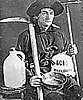
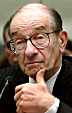
In a recently declassified lot of FED papers from a top secret cache, a batch of very old photographs were discovered, which -after scrutiny- leave no doubt about its previous Chairman's true origins...


Labels: ,

Apr 9, 2009

In uncertain times, all that glisters is a gold standard...

By Gillian Tett
Financial Times, London
Thursday, April 9, 2009


A few months ago, Terry Smith, head of Tullett Prebon, the interdealer broker, chaired a panel at the World Economic Forum meeting in Davos which was asked to produce one concrete recommendation to fix the global financial crisis.

The top pick? Not anything on toxic assets or fiscal spending. Instead, this gaggle of leading financiers called for a new reserve currency, akin to an old-style gold standard.

"Two-thirds of the world's assets are denominated in a fiat currency issued by a country whose authorities are taking policy actions which seem inevitably to lead to its debasement," explains Mr Smith, noting that "it seems ... the Chinese have now concluded that this is not acceptable."

Just a bit of pie-in-the-sky posturing of the sort that often occurs in high-altitude Davos? Perhaps. But Mr Smith is hardly a do-gooding, state-loving dreamer; on the contrary, Tullett Prebon is about as ruthlessly free-market as they come.

Moreover, these musings about a gold standard are currently cropping up in all manner of unlikely places. One savvy European property developer (who aggressively sold most of his holdings in early 2007) recently told me that he is now moving a growing proportion of his assets from government bonds into gold, even at today's elevated prices.

"The logical conclusion of where we will end up eventually is with some type of gold standard," he explains, arguing that future inflation will almost inevitably cause a future collapse in government bonds.

Half a world away in the Middle East, some sovereign wealth funds now say that they are stocking up enthusiastically on food and gold, due to similar reasoning.

Meanwhile, in New York a (still) formidable American hedge fund recently circulated private research that echoes the reasoning of Mr Smith. Most notably, this hedge fund points out that since the world abandoned the gold standard on August 15, 1971 credit creation has spiralled completely out of control.

But this four-decade long experiment with fiat currency is not just something of a historical aberration, it argues - but potentially very fragile too. After all, the only thing that ever underpins a fiat currency is a belief that governments are credible. In the past 18 months that belief has been tested to its limits. In coming years it could be shattered, particularly if the current wave of extraordinary policy measures unleashes a wild bout of inflation.

Hence that chatter about a gold standard. Indeed, as the debate bubbles up, some financiers are now even e-mailing each other an extraordinary little essay that Alan Greenspan himself wrote in support of a gold standard back in the 1960s, called "Gold and Economic Freedom":

http://www.financialsense.com/metals/greenspan1966.html

In the years since he penned this essay, Greenspan has partly backed away from those ideas (and he blatantly ignored their implications when he was at the Fed) But now they look prescient.

"Under a gold standard, the amount of credit that an economy can support is determined by the economy's tangible assets . . . [but] in the absence of the gold standard ... there is no safe store of value," Greenspan wrote back then, pointing out that without a gold standard in place, there is little to prevent governments indulging in wild credit creation. "Deficit spending is simply a scheme for the confiscation of wealth. Gold stands in the way of this insidious process. It stands as a protector of property rights."

Of course, for the moment all this muttering about gold is simply wild speculation. Even if Western leaders suddenly were to decide they wished to turn back the clock, the logistics of embracing a new gold standard would be mind-boggling. UBS, for example, calculates that the US reserves of gold are so small, relative to its monetary base, that a price above $6,000 an ounce would be needed to reintroduce a gold standard. To implement that standard in Japan, China and the US, the price would be more than $9,000. Moreover, right now few western governments have any motive to even entertain the debate, given that inflation may soon seem the least bad way to tackle the current overhang of debt.

But what this debate does show is just how much cognitive dissonance -- and utter uncertainty -- continues to stalk the markets. It might seem almost unthinkable to propose a return to a gold standard, in other words. However, the key point is that the last 18 months have already produced a stream of once unimaginable events.

Given that, shell-shocked investors are increasingly reluctant to rule anything out, as they stare at such uncharted waters. So while I would not bet today on a gold standard returning any time soon, I would also not bet that the debate dies away. Nor would I bet that the gold price crashes too far from its current rate of $900, while so much fear continues to stalk the world.

* * *

Labels: , , ,

Sep 19, 2007

William Greider: The lies of Alan Greenspan

By William Greider
The Nation, New York
via San Francisco Chronicle
Tuesday, September 18, 2007


Alan Greenspan has come back from the tomb of history to correct the record. He did not make any mistakes in his 18-year tenure as Federal Reserve chairman. He did not endorse the regressive Bush tax cuts of 2001 that pumped up the federal deficits and aggravated inequalities. He did not cause the housing bubble that is now in collapse. He did not ignore the stock market bubble that subsequently melted away and cost investors $6 trillion. He did not say the Iraq war is "largely about oil."

Check the record. These are all lies.

Greenspan's testimony endorsing the Bush tax cuts was extremely influential but now he wants to run away from it. In the instance of Iraq, Greenspan is actually correcting his own memoir, "The Age of Turbulence," which just came out. Last weekend, newspapers reported provocative snippets from the book, including this: "I am saddened that it is politically inconvenient to acknowledge what everyone knows: the Iraq war is largely about oil."

Wow, talk about your "inconvenient truth." Greenspan was blithely acknowledging what official Washington has always denied and the news media faithfully ignored. "Blood for oil." No, no, no, that's not what he meant, Greenspan corrected in a follow-up interview (with Bob Woodward in the Sept. 17 Washington Post). He was only saying that "taking out Saddam was essential" for "oil security" and the global economy.

Are you confused? Welcome to the world of slippery truth that Greenspan has always lived in. He was the Maestro, as Woodward's loving portrait dubbed him. Wall Street loved the chairman best because the traders and bankers knew he was always on their side and would come to their rescue. The major news media treated him like an Old Testament prophet. Whatever the chairman said was carved on stone tablets, even when it didn't make any sense, as it often didn't.

Some of us, who followed his tracks more closely, were not so kind. Harry Reid, now the Democratic Senate leader, said Greenspan was "one of the biggest political hacks in Washington." Amen. I called him "the one-eyed chairman" who could always spot reasons to stomp on the real economy of work and production, but was utterly blind to the destructive chaos in the financial system. No matter. The adoration of him was nearly universal.

Until now. The economic consequences of his rule are accumulating, and even the dullest financial reporters are stumbling on crumbs of truth about Greenspan's legendary reign. It sowed profound and dangerous imbalances in the U.S. economy. That's what happens when government power tips the balance in favor of capital over labor, favoring super-rich over middle class and poor, then holds it there for nearly a generation.

Things get out of whack and now the country is paying enormously. A pity reporters and politicians didn't have the nerve to ask these questions when Greenspan was in power.

He retired only a year ago, but is already trying to revise the history -- to explain away blunders that are now a financial crisis facing his successor; to rearrange the facts in exculpatory ways; to deny his right-wing ideological bias and his raw partisanship in behalf of the Bush Republicans.

The man is shrewd. He can see the conservative era he celebrated and helped to impose upon the American economy is in utter ruin. He is trying to get some distance from it before the blood splashes all over his reputation. Of course, he also came back to cash in -- an $8 million advance for a book that is sure to be a huge best-seller.

I don't want to be unkind, but Greenspan could have avoided all the embarrassing questions if his book was posthumous. I haven't read it yet. I have a hunch I am not going to like it.
 

William Greider, The Nation's national affairs correspondent, has been a political journalist for more than 35 years. A former Rolling Stone and Washington Post editor, he is the author of "One World, Ready or Not," "Secrets of the Temple," "Who Will Tell The People?," and, most recently, "The Soul of Capitalism" (Simon & Schuster).

* * *

Labels: , ,

Dec 15, 2006

Alan Greenspan says...

..."I expect that the US dollar will continue to drift downwards until there will be a change in the US balance of payments. . . . There has been some evidence that OPEC nations are beginning to switch their reserves out of dollars and into Euro and yen. It is imprudent to hold everything in one currency. . . That will be the experience of the next few years"
Words from Alan Greenspan before a Tel-Aviv business conference on Dec. 11.

Labels:

Oct 8, 2006

John Embry's speech at Silver Summit

Speech to The Silver Summit 2006
By John Embry
Chief Investment Strategist, Sprott Asset Management
Friday, September 22, 2006, Coeur d’Alene Inn

GOOD MORNING:
It is a distinct pleasure to address you this morning on one of my favorite subjects, and I would like to thank the organizers of the Silver Summit for giving me this opportunity. For a metal often unfairly derided as the poor man’s gold, I cannot tell you how impressed I am by the richness of intellectual independence exhibited by so many of you here today. It is a breath of fresh air within financial markets that seem increasingly dominated by a lemming-like refusal to deviate from conventional wisdom.
As many of you may know, I am rabidly bullish on the prospects for precious metals and have been for a number of years. The good news is that we have barely scratched the surface of this bull market and the better news is that I believe we are currently on the cusp of the next sharp up leg. When people ask me where we are in the bull market, my response is that we are currently digesting the first stage, where we true believers made a lot of serious money while the public remained blithely unaware. I believe that the second leg of the bull market is about to unfold, in which the public will both recognize and drive precious metals towards all-time real highs.

I speak of gold and silver almost interchangeably in that I think they are currently both subject to many of the same influences, of both the economic and trading variety. I do, however, believe that silver will ultimately have materially greater upside potential, due to severely depleted inventories, new uses for the metal, and what can only be described as an enormous short position. The reasons for my optimism seem self-evident. However, much of the investing public has failed to appreciate the opportunity to date and their discovery of these reasons will fuel the second leg of the bull market.

The primary factor underpinning what will turn out to be spectacular upside in gold and silver will be the impending erosion of faith in paper money. The noted French philosopher Voltaire got it right some 200 years ago when he observed that, “Paper money eventually returns to its intrinsic value - zero.” There are two tightly linked explanations for this conclusion. Literally speaking, paper money is inherently worth very little, relying on the continued faith of citizens to accept fiat currency as an acceptable method of payment and a reasonable store of value. No
less than Alan Greenspan once warned against this faith continuing without interruption. Testifying before the U.S. Congress in 1999, the former Fed chairman expressed his belief that,
gold still represents the ultimate form of payment in the world. It is interesting that Germany in 1944 could buy materials during the war only with gold, not with fiat, money paper. And gold is always accepted and is the ultimate means of payment and is perceived to be an element of stability in the currency and in the ultimate value of the currency and that historically has always been the reason why governments hold gold..
Greenspan confined his comments to gold, but I believe the same stabilizing qualities typified by gold are also exhibited by silver.

From the first observation that fiat currency is inherently worthless, we can also understand its more consequential failings. Because governments can create paper currency at essentially no cost, and given the political imperatives that drive deficit spending, the structure of today’s monetary system provides little obstacle to the ongoing debasement of currency.
This truth can be obscured for long periods of time, as the spectacular results in paper assets during the 1980s and 1990s certainly attest. However, my sense is that the decades-old bull market in financial assets is largely behind us.
We now find ourselves on the slippery slope of a runaway credit expansion needed to sustain the debt build-up that went before. It is not a stretch to say that at this point, there is no turning back. Either credit creation continues to accelerate, or the U.S. economy in particular risks a dangerous lapse into deflation. An outrageous asset party could quickly morph into a vicious debt hangover.
Given the debt pyramid that has already been constructed, it will take greater and greater additional credit to generate a dollar of real GDP growth with each passing year. This could portend hyperinflation somewhere down the road, but I suspect that policymakers will judge this preferable to a deflationary collapse that could rival the 1930s. Indeed, Fed Chairman Ben Bernanke is an expert on “The Great Depression” and I doubt very much that Helicopter Ben wants to preside over its sequel. So despite admirable efforts to portray himself as an inflation hawk, Bernanke’s academic work on the Depression firmly entrenches him in the dove camp.

But if Bernanke comprehends the dynamics of deflation, it is less obvious that he and financial markets are similarly cognizant of the risks posed by derivatives. Warren Buffett had the misfortune of having to unwind some relatively minor derivative positions in an insurance company acquisition by Berkshire Hathaway, and later described these financial instruments as “Weapons of Mass Financial Destruction.”Some people argue that the proliferation of derivatives is akin to the tail wagging the dog. I would go further, and say that the tail may be swinging the dog around the room and bouncing it off all four walls. The notional amount of derivatives in the system today is preposterous, and raises the scary possibility that we have learned nothing since the Long Term Capital Management fiasco of 1998. With the notional value of derivatives now measured in hundreds of trillions, the mind boggles. What financial calamity a significant counterparty failure could reveal is yet to be seen.

At this point, suffice it to say that reported statistics on derivatives bear no resemblance to the world economy. Buried in a recent U.S. Office of the Comptroller of the Currency report was the fascinating revelation that J.P. Morgan Chase’s derivatives book grew from a notional value of just over $48 ¼ trillion in the 4th quarter of 2005 to $53.75 trillion in the first quarter of 2006. To put this in perspective, the growth of $5.5 trillion is equivalent to approximately 44% of annual U.S. GDP. In addition, Morgan Chase’s outstanding book is over four times the country’s annual GDP. And although the largest player in derivatives markets, J.P.Morgan Chase is far from the only one.

This begs an obvious question: What is the purpose of these derivatives? For the longest time, my impression has been that the outsized use of derivatives relates not only to legitimate hedging activity, but also aids efforts to manage various markets. Whatever their purpose, the danger inherent in huge derivatives books seems clear. Past Fed Chairman Alan Greenspan was a leading apologist for derivatives, and would point out that only a very small portion of their notional value is ever at risk. Nevertheless, if even 1% of the Morgan Chase derivatives book is at risk, that would be extraordinarily significant when compared to its underlying equity. Thus, I tend to be very skeptical if a government official attempts to rationalize the explosion in derivatives. They may be the smoking gun that all is not well with the financial system.

The realization that both the financial system and its reserve currencies are shaky will lead to an inevitable loss of faith and confidence in paper money. This will drive people out of paper assets into tangibles. Despite the recent appreciation in the price of commodities, we have seen nothing yet. Their rise over the past few years has occurred because of favourable supply-demand imbalances. During this time, the faith in paper money has remained intact, as evidenced by the ongoing strength in the bond market. Patience, as always, is required, but a loss of faith in paper currency will be the biggest driver for gold and silver prices.
However, it is only one of several positive factors. Surging demand and stagnant supply have already driven many commodities up, and I certainly don’t see this dynamic changing any time soon. The great news for silver is that above ground stocks, which for years weighed on the market, now appear to be seriously depleted. I’m not sure that the market fully recognized the impact of the above ground inventories, particularly those controlled by the Chinese. Their depletion represents a watershed bullish inflexion point. At the same time, important new uses for silver, particularly in the medical field, should easily sustain demand.

There are others more qualified to speak on this particular subject, but allow me to say that I don’t see fabrication demand for silver to be any sort of negative in the foreseeable future.
However, investment demand for silver will be another important new positive for the metal. I don’t think one can overestimate the impact of the silver ETF over time as a powerful new force for demand. There are those who worry that the silver residing in the ETF may be used to influence the market at key moments, but I see that possibility as a minor negative when compared to the access the vehicle provides to the public to invest in silver. My partner Eric Sprott and I have been huge investors in physical silver, but it isn’t the easiest thing to deal in or store. Thus, a lot of investors, both institutional and individual, who would otherwise not bother, now have a vehicle that makes it incredibly easy to get involved.

As the second leg of the precious metals bull market gets underway, I think the silver ETF will really ramp up demand. In effect, investors can now own the metal with the same ease with which they would purchase a stock. On the mine supply side of the equation, higher prices are expected to lead to greatly increased supply. If only it were so easy and simple. What goes largely un-remarked is how difficult it is becoming to get a mine into production. The cost of everything that goes into mining, both the variable and fixed expenses, has exploded. In addition, the availability of competent personnel-miners, engineers,and geologists-is becoming a larger and larger issue. One close friend of mine, who runs a mining company in Canada, used the word “frightening” to describe the situation. He anticipates a dramatic increase in compensation for mining personnel across the board.

Another factor to consider is that in so many instances, silver is a by-product of base metal production. As you are all acutely aware, base metal prices have done spectacularly well. Yet they are much more dependent on the health of the international economy than precious metals, which will increasingly be seen as currencies rather than commodities. While I remain bullish on commodities in general over the long term, I strongly suspect that we could see a severe economic dislocation in the not-too distant future. This could damage the demand and price prospects for base metals. On the plus side, lower base metal prices should constrain production, which in turn would limit fresh supply of silver by-product.

Turning to geopolitics as a positive contributor to precious metals demand, I think the situation in the Middle East is arguably as tenuous as it has been anytime during my lifetime. Considering how long I’ve been around, that says a lot. With Iran seemingly progressing to eventual possession of nuclear weapons, the prospects for mayhem in that region are far higher than any rational human being would consider manageable. The implications for the oil price remain dramatic, despite the current quiescent period, and my partners at Sprott Asset Management think that oil is headed for triple digits. If oil production cannot rise materially from current levels, then growing demand in India and China alone should render this an easy call.

This has very positive implications for precious metals, which are already seriously under-priced compared to oil. If the average ratio of the price of oil to gold that has prevailed since 1971 were in effect today, gold would be close to $1000 and silver would probably be at least $20.
Perhaps even more important than oil, the U.S. dollar reserves that are piling up in central banks throughout the Middle East, Asia and Russia are going to be diversified into other assets, and I know gold and precious metals will receive more than passing consideration. Gold flows to where the wealth is being created. Not surprisingly then, bullion is leaving North America and Europe and heading for Asia. As Russia and China gain in economic strength, these trends will intensify. Gold and, by extension, silver, will increase dramatically in price in all paper currencies, but most particularly in the doomed U.S. dollar.

I’ve talked about the prospects for silver as an investment, but at this point I’d like to switch gears somewhat. In my opening today, I made reference to the lemming-like unwillingness of the mainstream financial world to deviate from conventional wisdom. As it pertains to silver, this herd mentality has manifested itself in two important, interrelated respects. First, mainstream investment professionals and press outlets cannot bring themselves to regard silver as money.
Historically, this seems absurd. The Silver Institute notes that in 700 B.C. Mesopotamian merchants used the metal as a form of exchange. Not to be outdone, both the ancient Greeks and Romans employed currencies with substantial quantities of silver. More recently, the English sterling exhibited the stabilizing quality that silver contributes to the monetary system. Fast-forward to today, and Hugo Salinas Price is endorsing a silver-backed currency for Mexico.

Far from being a relic, silver seems poised to reassert itself.

In short, it is near impossible to ignore the longevity of silver’s role as money. By contrast, the ancient empires would regard today’s stockpiling of U.S. dollars as potentially useful for hoarding ink, but an exercise in wealth-preserving futility. This recognition is increasingly important in an age of depreciating paper currencies, confined to ongoing debasement by the twin burdens of accumulated debt and future government obligations. No less than Ben Bernanke has boasted that the U.S. government can create an unlimited supply of dollars via the supposed magic of the printing press. We should all give thanks that silver’s value cannot be eradicated by the same means. If anything, the allure of precious metals will soar as investors come to realize the decline of fiat money.


It is exactly due to silver’s historic role as money, and in particular the metal’s relationship to gold, that governments and their allies have an interest in suppressing its price. This silver market manipulation, understood as part of a larger pattern of increasing market intervention by central banks, is the second major fact ignored by mainstream commentators. It is also the subject that will shape the remainder of my talk today.

I am concerned not simply that the price of silver is being tampered with, but that silver’s natural allies mostly combat this activity with stone-cold silence. In the face of obvious price-fixing, the response is a neglect that is tantamount to aiding and abetting the manipulators. My abiding hope is that this silence will abate, that the silver community can summon the courage to stand up for themselves and their product, all the while permitting silver to reclaim its rightful role as money.


As some of you are no doubt aware, my colleague Andrew Hepburn and I have written two studies on market manipulation for Sprott Asset Management.
Let me first discuss our 2004 report, “Not Free, Not Fair: The Long-Term Manipulation of the Gold Price”. We carefully documented every major piece of evidence indicating that the gold market was unfairly influenced by the manipulative trading activities of central banks and well-connected bullion banks. Understanding that the subject was controversial, we provided a litany of footnotes to support our claims. It was our explicit wish that the investment community would engage our material, by either challenging our report on its merits, or accepting its conclusions and publicly voicing disapproval at the management of gold’s price. Neither occurred. Privately, we received very positive feedback from those inclined to the manipulation viewpoint. We have informed reasons to believe that some of the most well-known gold industry executives reside in this camp.

Discretion demands that we not publicize our private indications in this regard, but fortunately the public record is sufficiently bountiful to show that the industry does not consider the allegations to be baseless. In May 1999, John Willson, then chief executive of Placer Dome was quoted by the Financial Times as follows:

“I find it difficult to believe, given what (Alan) Greenspan said in the middle of last year, concerning the central banks intention to maintain a low gold price, that there is not some concerted action going on between central banks to hold inflation down through holding down the price of gold.”

Willson was not alone. Also in 1999, in response to persistent rumours that Gold Fields had recently sold forward large quantities of gold, the company issued a press release denying such actions. The statement quoted company chairman Chris Thompson asserting that,

"These rumours appear to be emanating from New York-based bullion dealers.
The seeming explanation for these unfounded and persistent rumours is a desire by the short end of the market, or the dealers, to talk the gold price down. We do not wish to be associated with these efforts.”

Approximately a month after this press release, the Sunday Times of London quoted Thompson to the effect that “there was a large amount of circumstantial evidence that investment banks were involved in a plot” to depress gold prices.
Later that year, Anglogold spoke of the industry’s role in achieving the September 1999 Washington Agreement, which limited European central bank gold sales and leasing. In an interview with the U.K. Independent newspaper, an Anglogold spokesman was quoted as acknowledging that, “[F]or a long time we, as producers, saw people manipulating our market and had no part in the game.”
The spokesman’s suggestion was that this realization underpinned industry efforts to secure the central bank accord. Even charitably assuming this is true, the silence of the gold industry after the Agreement cannot be overlooked. Gold may be rising, but gold’s suppression has intensified. The gathering courage displayed by the gold industry in 1999 has disappeared. In its place, the silence of 2006 reigns supreme.
It’s one thing for people who believe a market is rigged to remain silent for fear of recrimination. What was so startling about our report on gold manipulation was the widespread refusal of detractors to publicly challenge our central thesis.

Not one mining company publicly said we were wrong. Not one investment bank said we were wrong. And no central bank said so either. Statements by central bankers that have surfaced since we published our report likely explain official reticence on the subject. First, in a speech delivered in 2005, William White, Head of the Monetary and Economic Department of the Bank for International Settlements, admitted that a major objective of central bank cooperation was “…the provision of international credits and joint efforts to influence asset prices (especially gold and foreign exchange) in circumstances where this might be thought useful.”

When, you might ask, might joint efforts to influence gold prices be useful to central banks? To answer this, one only need venture into the published memoirs of Paul Volcker, former chairman of the Federal Reserve. Discussing a multilateral agreement in the 1970s to adjust the exchange rates of the yen, European currencies, and the dollar, Volcker remarked that,
Joint intervention in gold sales to prevent a steep rise in the price of gold, however, was not undertaken. That was a mistake. Through March, the price of gold rose rapidly, and that knocked the psychological props out from under the dollar.

As John Brimelow, a very perceptive gold analyst, has delicately articulated, “One can infer that the mistake of allowing gold an unrestrained voice at times of policy shifts was subsequently guarded against.”
Volcker’s statement has important contemporary implications. On May 14 of this year, the Guardian newspaper reported the following:
The International Monetary Fund is in behind-the-scenes talks with the U.S., China and other major powers to arrange a series of top-level meetings about tackling imbalances in the global economy, as the dollar sell-off reverberates through financial markets.

Almost to the day, the price of gold peaked at $720 an ounce. A good source of mine was told that around this time, the U.S. government ordered the gold price taken down, evidently fearful of the implications of bullion’s rise for financial markets.
Evidence pointing to surreptitious market interventions by governments is not confined to the gold market. In the course of conducting research for the second Sprott report, this one on stock market manipulation, my associate Andrew Hepburn uncovered a highly revealing statement by former Clinton advisor George Stephanopoulos on ABC’s Good Morning America. Speaking as a correspondent in the aftermath of September 11, Stephanopoulos described the government’s efforts to prevent a free-fall when trading resumed. After listing a few conventional means of preventing a panic, he stated:
And perhaps most important, there’s been – the Fed in 1989 created what is called a plunge protection team, which is the Federal Reserve, big major banks, representatives of the New York Stock Exchange and the other exchanges, and there – they have been meeting informally so far, and they have kind of an informal agreement among major banks to come in and start to buy stock if there appears to be a problem. They have, in the past, acted more formally.
I don’t know if you remember, but in 1998, there was a crisis called the long-term capital crisis. It was a major currency trader, and there was a global currency crisis. And they, at the guidance of the Fed, all of the banks got together when that started to collapse and propped up the currency markets. And they have plans in place to consider that if the stock markets start to fall.

Stephanopoulos is not the only well-connected individual to have revealed this essentially unspoken interventionism. In the lead-up to the Iraq war, the Japanese Secretary of the Cabinet told a news conference that, “There was an agreement between Japan and the U.S. to take action cooperatively in foreign exchange, stocks and other markets if the markets face a crisis.”


I trust I have established that despite free market rhetoric, today’s major markets are susceptible to government intrusion. With this in mind, the recent price action in precious metals has been particularly suspicious. On the day after Labour Day, gold surged $14.00, silver rose sharply then mysteriously slumped, and the un-hedged Gold Index (the HUI) staged a powerful breakout. I closely watch the positioning on the Japanese futures market, the Tocom, which is considerably more transparent than its American counterpart, the Comex. Despite this robust unfolding strength in precious metals, there had been an ongoing aggressive buildup of short positions in gold by the usual suspects on Tocom, the large Japanese banks and one large American investment bank. At the same time, Comex floor sources reported that on the day gold rose $14.00, a large seller blocked the advance of the gold price at $648 on the December futures contract by selling indiscriminately until the buying was finally exhausted. The next day, gold was driven down, forcing the speculative buyers to unload their positions. For five consecutive days, gold was pounded. The thinner silver market was correspondingly annihilated on Comex, falling over $2.00 per oz. in a three-day period and continuing to fall in the aftermath, with the percentage loss reaching nearly 20%.
This decline, in a very short period of time, in a market with a physical shortage, is bizarre. But it is not without precedent. Often when Comex opens, both gold and silver are smashed in unison, with the downdrafts looking identical.

In addition, the two metals are routinely crushed in quiet periods on the Access Market. The violent attempts to sell gold and silver through key support levels is not indicative of profit-maximizing longs unloading positions, but instead demonstrates orchestrated movements.
Why this is disturbing to me, other than the fact that it does not appear to be legitimate price action, is the fact that three or four traders hold over 80% of the Comex silver short position. Ted Butler, a gentleman who knows as much or more about the silver market than anyone that I have ever encountered, believes this represents manipulation and I agree with him. The size of the paper short position in silver in relation to the size of the physical market, whether relative to available inventories or annual production, is outrageous, particularly when this short position is concentrated in so few hands. If the longs called for delivery, where is the silver going to come from? If the short positions were smaller, wouldn’t it be axiomatic that the silver price would be much higher?
It is tempting to believe that the manipulation of precious metals markets is aimed at garnering illicit profits for certain traders. But I think this misses the larger point. Gold is widely seen as a barometer of economic health, and silver is tightly connected to its more expensive cousin. Thus, as gold analyst Reg Howe has observed, “Any efforts to affect interest rates through the manipulation of gold prices cannot safely ignore silver.” In this regard, my sense is that the recent clobbering of silver is a case of the metal being an innocent bystander in a greater conflict. To the extent that the silver price runs free, it may also free the gold price from the shackles of government influence. Think of silver as the well-meaning witness whose observations must be silenced.

But despite the repeated mugging of silver, those responsible for ensuring its safety have abrogated their duty to protect the metal. The Commodities Futures Trading Commission continues to allow manipulation to occur, despite the howls of ordinary investors. Yet the CFTC is not the only possible defender of a free silver market. In particular, the captains of the silver industry, those mining companies engaged in its production, refuse to publicly confront these lingering allegations of market manipulation. This is not acceptable. As someone who oversees a large precious metals fund, I cannot tell you how frustrating it is to witness this obvious manipulation. I feel like the newscaster played by Peter Finch, in that classic movie from years ago, NETWORK, who would rant on air: “I’m mad as hell and I’m not going to take it anymore”.

It is further distressing to watch the mining companies suffer in silence, adamantly refusing to call the emperor on his lack of clothes (or, his large short position) and demand appropriate remedies. If you take but one message from my talk, let it be this: It is time that the era of silent collaboration in the precious metals markets ends. If you are not vocally and publicly against the silver manipulation, your reticence is facilitating its continuation.

There is a tendency in financial markets to ignore questions of right and wrong. Many companies and investors seem to believe that so long as they are positioned correctly, what happens behind the scenes is but an irrelevance. If we see the economy as a mere vacuum, this view might hold currency. But markets are about more than trading paper. They involve outcomes that affect the daily lives of ordinary citizens. In silver, I am talking about the best interests of shareholders, of miners, and of the communities engaged in the metal’s production. All these stakeholders have needlessly suffered due to the manipulation of the silver price. And all stand to benefit should investors and the industry muster the determination to end the meddling. Today I ask you to do just that.

Labels: , ,

Sep 17, 2006

Money, Banking and the Federal Reserve


Για όσους φίλους και φίλες έχουν λίγη άνεση με τα αγγλικά, αξίζει το κόπο να δείτε αυτό το φιλμάκι (παραγωγή του Ινστιτούτου von Mises) που θα βοηθήσει στην κατανόηση των "μηχανισμών" του χρήματος, των τραπεζών και -τι άλλο- της FED.

Λίαν κατατοπιστικό όσο και "ενοχλητικό"...


Thomas Jefferson and Andrew Jackson understood "The Monster". But to most Americans today, Federal Reserve is just a name on the dollar bill. They have no idea of what the central bank does to the economy, or to their own economic lives; of how and why it was founded and operates; or of the sound money and banking that could end the statism, inflation, and business cycles that the Fed generates.

Dedicated to Murray N. Rothbard, steeped in American history and Austrian economics, and featuring Ron Paul, Joseph Salerno, Hans Hoppe, and Lew Rockwell, this extraordinary new film is the clearest, most compelling explanation ever offered of the Fed, and why curbing it must be our first priority.

Alan Greenspan is not, we're told, happy about this 42-minute blockbuster. Watch it, and you'll understand why. This is economics and history as they are meant to be: fascinating, informative, and motivating. This movie could change America.

Labels: ,

Aug 15, 2006

Money...

Όσοι από εσάς διαβάσατε το αρχικό ποστ που αναφέρεται στο άρθρο του Alan Greenspan (Χρυσός και Οικονομική Ελευθερία) θα έχετε σχηματίσει μια ιδέα του τι είναι Χρήμα.
Είναι αυτονόητο ότι χωρίς την (ευρεία) έννοια του χρήματος δεν θα υπήρχε και η έννοια της οικονομίας!
Στο σημείο αυτό λοιπόν ας κάνουμε μια λεπτομερέστερη θεώρηση στα θεμελιακά στοιχεία του χρήματος.
Για να λειτουργήσει σαν Χρήμα ένα οποιοδήποτε εμπόρευμα ή αγαθό πρέπει να έχει τρείς βασικές ιδιότητες/χαρακτηριστικά, ήτοι:

1. Να αποτελεί ανταλλακτικό/συναλλακτικό μέσο, ήτοι να:
  • έχει ρευστότητα και ευκολία συναλλαγής (fungibility) και μικρή διαφορά μεταξύ τιμής αγοράς και πώλησης (spread).
  • είναι εύκολο στη μεταφορά (λ.χ. τα πολύτιμα μέταλλα προτιμώνται από το χαλκό ή το σίδηρο λόγω -συν τοις άλλοις- της υψηλής σχέσης αξίας/βάρους)

2. Να αποτελεί λογιστική μονάδα, ήτοι να:
  • είναι επιδεκτικό διαίρεσης και υποδιαίρεσης χωρίς απώλεια αξίας
  • είναι η κάθε μονάδα απόλυτα ισοδύναμη και ανταλλάξιμη με οποιαδήποτε άλλη

3. Να αποτελεί μέσον διατήρησης και διαφύλαξης αξίας, ήτοι να:
  • έχει μεγάλη διάρκεια ζωής χωρίς απώλεια αξίας
  • έχει σταθερή εσωτερική αξία (intrinsic value) διαχρονικά
  • μην επιδέχεται πλαστοποίηση/παραχάραξη και η γνησιότητά του να είναι άμεσα αναγωρίσιμη

Για τους παραπάνω λόγους έχουν επανειλημμένα υιοθετηθεί σαν χρήμα, εδώ και πολλές χιλιετίες, στις περισσότερες κοινωνίες ο χρυσός και ο άργυρος. Από τα μέσα του 20ου αιώνα όμως, έχει παραμερισθεί ο ιστορικός ρόλος των πολυτίμων μετάλλων σαν χρήμα σε όφελος του "fiat money" που σημαίνει (χαρτο)νόμισμα χωρίς ανάλογο απόθεμα χρυσού ή αργύρου.

Με το τρόπο αυτό οι μεταπολεμικές κυβερνήσεις άσκησαν την γνωστή ελλειματική νομισματική πολιτική. Αλλά ο πανίσχυρος νόμος της αγοράς που όταν έχουμε πληθώρα ενός προϊόντος/αγαθού τότε η τιμή του στην αγορά πέφτει ισχύει το ίδιο και με το χρήμα. Αυτός είναι ο αληθινός (νομισματικός) πληθωρισμός - και όχι η αύξηση της τιμής των αγαθών (που είναι το αποτέλεσμα).

Ο ίδιος ο σημερινός "κυριος FED", o Benjamin Bernanke όταν ρωτήθηκε πριν λίγα χρόνια με ποιά μέσα θα αντιμετωπίσουν την ύφεση στην αμερικανική οικονομία, απάντησε ότι η FED έχει στη διάθεσή της ένα πανίσχυρο εργαλείο που λέγεται "πρέσσα" και μπορεί σε σύντομο χρόνο να τυπώσει και να πλημμυρίσει την οικονομία με εκατομμύρια δολλάρια (όχι ότι δεν το κάνει ήδη εδώ και καιρό!) τα οποία μπορούν να τα ρίχνουν με ελικόπτερα εάν χρειαστεί! (αυτό θα πεί πραγματικά έρπουσα φαλκείδευση του εισοδήματος των μισθωτών και συνταξιούχων!)

Και τώρα άς δούμε ένα πίνακα με συγκριτικά χρηματικα μεγέθη που βοηθά να βάλουμε σε προοπτική μερικά νούμερα.

1,000,000,000,000: 1 τρισεκατομμύριο
1,000,000,000: 1 δισεκατομμύριο
1,000,000: 1 εκατομμύριο
$400,000,000,000,000: υπολογιζόμενη συνολικό ύψος παραγώγων παγκοσμίως (20 x U.S. GDP)
$118,000,000,000,000: παγκόσμια αγορά κεφαλαίου (Stocks, Bonds, κλπ) Φεβρ. 2005 McKinsey Global Inst.
$75,000,000,000,000: κρατικές υποχρεώσεις των ΗΠΑ (συντάξεις, υγεία κλπ)
$49,000,000,000,000: παγκόσμια αγορά ομολόγων, β'εξαμ. 2004 PWL Capital Inc.
$46,000,000,000,000: παγκόσμιο σύνολο χαρτονομίσματος 2004 ( M2 & GDP των E.Ε, ΗΠΑ, Ιαπωνία & Κίνα
$45,153,000,000,000: περιουσιακά των νοικοκυριών ΗΠΑ, 2004. (περιλαμβάνει ακίνητα και επενδύσεις)
$37,000,000,000,000: παγκόσμια κεφαλαιοποίηση αγορών 2001 (ΟΗΕ)
$21,700,000,000,000: παγκόσμια κεφαλαιοποίηση NYSE , Δεκ '05 (NYSE)
$21,000,000,000,000: αγορά ομολόγων ΗΠΑ, Σεπτ '03: (IAPF , treas.gov)
$12,605,000,000,000: ΑΕΠ ΗΠΑ, 2005 (3Q) http://www.bea.doc.gov/bea/dn/home/gdp.htm
$10,261,000,000,000: M3 (τράπεζες ΗΠΑ) Ιαν.'06 http://tinyurl.com/vra0
$8,249,000,000,000: χρέος ΗΠΑ, 2-23-2006 (Bureau of Public Debt)
$4,000,000,000,000: παγκόσμια κεφαλαιοποίηση μετοχών Τόκιο, Δεκ '05
$3,600,000,000,000: παγκόσμια κεφαλαιοποίηση Nasdaq, Δεκ. '05 http://nyse.com
$3,000,000,000,000: παγκόσμια κεφαλαιοποίηση μετοχών Λονδίνου, Δεκ.'05 http://nyse.com
$2,622,000,000,000: αξία συνολικού χρυσού που έχει έως σήμερα παραχθεί παγκόσμια (150.000 τόν. (4.6 δισ oz.) @ $570/oz. http://tinyurl.com/vrcc
$2,500,000,000,000: παγκόσμια κεφαλαιοποίηση μετοχών Euronext, Δεκ '05
$2,400,000,000,000: προϋπολογισμός ΗΠΑ 2005
$1,200,000,000,000: παγκόσμια κεφαλαιοποίηση μετοχών Deutsche Boerse, Δεκ '05
$754,000,000,000: σύνολο κυκλοφορούντος νομίσματος ΗΠΑ, Μαρτ.2005 (FMS)
$753,000,000,000: έλειμμα τρεχουσών συναλλαγών ΗΠΑ 2005, (Bureau of Economic Analysis)
$596,000,000,000: αύξηση χρέους γιά το οικον. έτος '03-'04 (Bureau of Public Debt)
$400,000,000,000: αξία συνολικού αργύρου που έχει έως σήμερα παραχθεί παγκόσμια 40 δισ. oz. @ $10/oz. http://snipurl.com/93j1
$376,000,000,000: κεφαλαιοποίηση Exxon Mobil (μεγαλύτερη αμερικανική εταιρ.) (8-05) (Yahoo)
$286,000,000,000: χρέος της General Motors -μεγαλύτερη αυτοκινητοβχανία ΗΠΑ. (Yahoo)
$149,000,000,000: αξία χρυσού ΗΠΑ: 261 εκατ. oz., @ $570/oz. (FMS)
$110,000,000,000: παγκόσμια κεφαλαιοποίση όλων των χρυσορυχείων (Σεπτ. 2005, Denver Gold Conference)
$26,000,000,000: κεφαλαιοποίηση της Newmont, Ιούλ '05 (μεγαλύτερος παραγωγός χρυσού παγκοσμίως)
$8,226,000,000: συνολική κεφαλαιοποίηση πρωτογενών παραγωγών αργύρου
$7,000,000,000: ετήσιος τζίρος στα καζίνο του Las Vegas.
$3,500,000,000: 350 εκατ.oz. αργύρου σε "ταυτοποιήσιμες" ράβδους, (GFMS @ $10/oz.)
$1,300,000,000: 130 εκατ. oz. αργύρου άντλησε η Barclays Silver ETF
$720,000,000: 72 εκατ. oz. αργύρου σε απόθεμα στη NYMEX (1-05-05) @ $10/oz.
$266,000,000: 40 εκατ.oz. αργύρου για επένδυση το 2004 @$6.66/oz.
$75,000,000: όριο 7.5 εκατ. oz. αργύρου @ $10/oz. (δηλ. όριο 1500 συμβόλαια/επενδυτή) στο NYMEX
$7,500,000: όριο 0.75 εκατ. oz. of silver @ $10/oz. (πάνω από 150 συμβόλαια δεν τηρείται ανωνυμία) στο NYMEX
$5,000: όριο ανάληψης τραπέζης χωρίς προηγούμενη προειδοποίηση
$300: όριο ανάληψης σε ΑΤΜ
$10: αξία της κατά κεφαλή κατοχής αργύρου στις ΗΠΑ.


Με τέτοια συγκριτικά μεγέθη, δεν χρειάζεται να είναι κανείς Einstein για να καταλάβει μέχρι πού θα εκτοξευθούν (όπως είπε και ο John Embry της 'Sprott Asset Management': "..it's not just going through the roof, it's going to the moon!") οι τιμές αργύρου και χρυσού όταν η πλημμυρίδα των δολλαρίων και ευρώ αναζητήσει "καταφύγιο" από τον αληθινό πληθωρισμό...

Labels: , , , ,

Jul 25, 2006

Στο σπίτι του κρεμασμένου δεν μιλάνε γιά ....Μ3!

Γιά να δούμε λοιπόν φίλοι μου, πως εξυφαίνουν σιγά-σιγά (αλλά σταθερά και μεθοδικά) το σχέδιο αποστέρησης της οικονομικής ελευθερίας από τον απληροφόρητο -περί τα οικονομικά- πολίτη οι εκάστοτε κυβερνήσεις με τους λεγόμενους "κρατιστές της ευημερίας" -welfare statists- όπως τους αποκαλεί ο ίδιος ο Sir Alan Greenspan στο άρθρο του "Χρυσός και Οικονομική Ελευθερία" ** έχοντας για βασικό τους "εργαλείο" την μακροχόνια άσκηση μεθοδευμένης και γενικευμένης πληθωριστικής πολιτικής (deficit spending).

Για να μπορέσουμε όμως να συνειδητοποιήσουμε το μέγεθος της νομισματική απάτης που περιστρέφεται (κυρίως αλλά όχι μόνο) γύρω από το $ ΗΠΑ (is it a bird??..is it a plane?...no, it's... SuperDollar!) θα χρειαστεί να πούμε πρώτα λίγα πράγματα για αυτό το μυστηριώδες και τόσο μισητό στους "κρατιστές" Μ3...

Η συνολική διαθέσιμη ποσότητα χρήματος σε μία οικονομία για την αγορά αγαθών, υπηρεσιών και χρηματοπιστωτικών εργαλείων ονομάζεται "χρηματικό απόθεμα" -money supply (M).

H "M" απαρτίζεται από τέσσερα κλιμακωτά υπομεγέθη:

  • Το Μ0 (σύνολο χαρτονομισμάτων, κερμάτων και λογαριασμοί της κεντρικής τράπεζας μετατρέψιμοι σε νόμισμα)

  • Το Μ1 (Μ0 + λογαριασμοί όψεως και τρεχούμενοι)

  • Το Μ2 (Μ1 + λογαριασμοί ταμιευτηρίου και μεγάλες καταθέσεις άνω των $100.000)

  • Το Μ3 (Μ2 + άλλοι λογαριασμοί εξωτερικού και καταθέσεις σε ευρωδολλάρια)


  • (σας κούρασα λίγο αλλά ...τώρα έρχεται το ζουμί!...μουσική παρακαλώ!)

    Τα-ραααααα!!!...

    Μελετήστε προσεκτικά το παρακάτω γράφημα:
    (Κάνετε κλικ επάνω στο γράφημα για να μεγεθυνθεί)

    Χρηματικό Απόθεμα -Money Supply- των ΗΠΑ, από το 1959 έως σήμερα περίπου (σε δις $)
    Το Μ3 των ΗΠΑ σε όλο το πληθωριστικό του Μεγαλείο!


    Το Μ3.

    Αυτό λοιπόν το σπουδαίο και αποκαλυπτικό για την νομισματική υγεία και οικονομία μιας χώρας στατιστικό μέγεθος, η αμερικανική FED απεφάσισε -έτσι "ξαφνικά"- να το αποσύρει, και να σταματήσει στις 23 Μαρτίου 2006 (!) την εβδομαδιαία δημοσίευσή του, βάζοντας έτσι ένα άδοξο και απότομο τέλος στην μακρόχρονη ιστορία του.

    Η λακωνική ανακοίνωση έλεγε ότι "δεν χρησίμευε πλέον τόσο ώστε να δικαιολογούνται κονδύλια για την κατάρτισή του" !!

    Σε επόμενο post θα πούμε τι σημαίνει αυτή η απόφαση και τι ίσως να κρύβεται πίσω της...

    Labels: ,

    Jul 10, 2006

    Χρυσός και Οικονομική Ελευθερία...

    da goldigger
    ο Χρυσοθήρας γράφει...


    Η Επερχόμενη Χρηματο-οικονομική λαίλαπα...
    (και πως να προφυλαχθούμε)

    Κατ' αρχάς θέλω να σας δείξω ένα ελάχιστα γνωστό κείμενο του "Sir" Alan Greenspan, που δημοσιεύτηκε για πρώτη φορά στο βιβλίο "Καπιταλισμός - το άγνωστο ιδεώδες" της αείμνηστης Ayn Rand το 1967, δηλαδή την εποχή που ο Alan ήταν ακόμα ένας "ντεμπυτάντ" στο χώρο της οικονομικής σκέψης και πολύ πρίν αναλάβει καθήκοντα "Αρχι-αλχημιστού" σαν αρχηγός της FED.
    Πολύ πριν, δηλαδή, απορροφηθεί από τον Λεβιάθαν του Χρηματοπιστωτικού κατεστημένου. Το κείμενο τιτλοφορείται "Χρυσός και Οικονομική Ελευθερία".
    Αξιοσημείωτο είναι το γεγονός ότι όταν ο Ron Paul
    (από τα λίγα "σκεπτόμενα" μέλη του Αμερικανικού Κογκρέσσου) ερώτησε τον Sir Αlan εάν μετά από όλα αυτά τα χρόνια είχε τίποτα να αλλάξει στο αρχικό κείμενο της μελέτης αυτής, εκείνος απάνησε: "...ούτε ένα κόμμα"!

    Διαβάστε το με προσοχή και μετά τα ξαναλέμε....


    Πηγή: "Capitalism, the Unknown Ideal" by Ayn Rand, 1967

    Η εργασία που ακολουθεί είναι μια κατά το δυνατόν πιστή μετάφραση άρθρου του ΑΛΑΝ ΓΚΡΗΝΣΠΑΝ που μαζί με άλλες εργασίες του, περιέχονται στο βιβλίο "ΚΑΠΙΤΑΛΙΣΜΟΣ, ΤΟ ΑΓΝΩΣΤΟ ΙΔΕΩΔΕΣ" της ΑΪΑΝ ΡΑΝΤ - έκδοση 1967


    (Ευχαριστώ τον C.I.G.A. Πάνο για την ευγενική του προσφορά)

    Sir Greenie

    Χρυσός και Οικονομική Ελευθερία

    Του ΑΛΑΝ ΓΚΡΗΝΣΠΑΝ


    Μία σχεδόν υστερική αντιπαλότητα προς τον "κανόνα χρυσού" είναι η μπαντιέρα που ενώνει τους απανταχού κρατιστές* όλων των αποχρώσεων. Φαίνεται πως αντιλαμβάνονται, ίσως πιό καθαρά και ξάστερα από πολλούς άλλους συνεπείς υποστηρικτές της ελεύθερης κοινωνίας, ότι ο χρυσός και η οικονομική ελευθερία είναι αδιαχώριστα, ότι ο κανόνας χρυσού είναι ένα εργαλείο της ελεύθερης κοινωνίας και ότι έκαστο επιβάλει και προϋποθέτει την ύπαρξη του άλλου.

    Για να καταλάβουμε την αιτία της αντίθεσής τους, είναι απαραίτητο να κατανοήσουμε κατ' αρχάς τον συγκεκριμένο ρόλο του χρυσού σε μια ελεύθερη κοινωνία.

    Το χρήμα είναι ο κοινός παρονομαστής όλων των οικονομικών συναλλαγών. Είναι το αγαθό που εξυπηρετεί σαν μέσον συναλλαγών, είναι παγκοσμίως αποδεκτό, από όλους τους συμμετέχοντες σε μια συναλλακτική οικονομία, σαν πληρωμή αγαθών και υπηρεσιών και ως εκ τούτου μπορεί να χρησιμοποιηθεί σαν μέτρο αξίας στην αγορά και σαν αποθήκευση αξίας π.χ. σαν μέσον αποταμίευσης.

    Η ύπαρξη τέτοιου είδους είναι προϋπόθεση για μια οικονομία κατανομής εργασίας. Εάν οι άνθρωποι δεν είχαν ένα είδος αντικειμενικής αξίας που να ήταν γενικά αποδεκτό σαν χρήμα, θα έπρεπε να καταφύγουν σε πρωτόγονες ανταλλαγές προϊόντων ή θα ήταν αναγκασμένοι να ζήσουν σε αυτάρκη αγροκτήματα και να στερηθούν των ανεκτίμητων πλεονεκτημάτων της εξειδίκευσης. Εάν οι άνθρωποι δεν είχαν τρόπο αποθήκευσης αξίας, δηλαδή αποταμίευσης, θα ήταν αδύνατον να προβούν σε συναλλαγές ή μακροχρόνιο προγραμματισμό.

    Η απόφαση για το ποιό ακριβώς μέσον συναλλαγών θα είναι αποδεκτό από όλους τους συμμετέχοντες σε μια οικονομία δεν είναι αυθαίρετη. Πρώτα απ' όλα το μέσον συναλλαγών πρέπει να είναι ανθεκτικό στο χρόνο. Σε μια πρωτόγονη κοινωνία περιορισμένου πλούτου, το σιτάρι θα μπορούσε να θεωρηθεί αρκετά ανθεκτικό για χρήση σαν μέσο συναλλαγών, εφόσον όλες οι δοσοληψίες θα συνέβαιναν μόνον κατά την διάρκεια και αμέσως μετά τον θερισμό, και δεν θα περίσσευε κάποια ποσότητα άξια λόγου για μακροχρόνια αποθήκευση. Αλλά όπου το ζήτημα "αποθήκευση-αξίας" γίνεται σημαντικό, όπως είναι στις πλούσιες, περισσότερο πολιτισμένες κοινωνίες, το μέσον συναλλαγών πρέπει να είναι ένα ανθεκτικό αγαθό, συνήθως κάποιο μέταλλο.
    Ένα μέταλλο γενικώς επιλέγεται επειδή είναι ομοιογενές και διαιρετό: κάθε μονάδα είναι ολόϊδια με οποιαδήποτε άλλη και μπορεί να συγχωνευτεί ή να μορφοποιηθεί σε οποιαδήποτε ποσότητα. Τα πολύτιμα κοσμήματα π.χ. δεν είναι ούτε ομοιογενή ούτε διαιρετά.

    Ακόμα πιο σημαντικό είναι, το αγαθό που θα επιλεγεί σαν μέσον συναλλαγών πρέπει να είναι πολυτελές. Η ανθρώπινη επιθυμία για πολυτέλειες είναι απεριόριστη και ως εκ τούτου τα πολυτελή αγαθά είναι πάντα σε ζήτηση και θα είναι πάντα αποδεκτά. Το σιτάρι είναι μια πολυτέλεια σε υποσιτιζόμενες κοινωνίες, αλλά όχι σε ευημερούσες κοινωνίες. Τα τσιγάρα, καλώς εχόντων των πραγμάτων, δεν θα εξυπηρετούσαν σαν χρήμα, αλλά αυτή ήταν η χρήση τους στην μεταπολεμική Ευρώπη όπου εθεωρούντο μια πολυτέλεια. Ο όρος πολυτελές αγαθό υποδηλώνει σπανιότητα και υψηλή αξία ανά μονάδα. Έχοντας υψηλή τιμή ανά μονάδα, ένα τέτοιο αγαθό μεταφέρεται εύκολα, για παράδειγμα μια ουγγιά χρυσού (31,1 γραμμάρια) αξίζει όσο μισός τόνος σιδήρου.

    Στα πρώϊμα στάδια μιας αναπτυσσόμενης χρηματικής οικονομίας, διάφορα μέσα συναλλαγών θα μπορούσαν να χρησιμοποιηθούν, εφόσον μια μεγάλη ποικιλία εμπορευμάτων θα ικανοποιούσε τις παραπάνω συνθήκες. Ωστόσο ένα από τα εμπορεύματα σταδιακά θα εκτοπίσει όλα τα άλλα, όντας ευρύτερα αποδεκτό.

    Οι προτιμήσεις ως προς τι θα συσσωρευτεί σαν "αποθήκη-αξίας" θα κλίνουν προς το πλέον αποδεκτό εμπόρευμα, και αυτή η τάση με την σειρά της , θα κάνει αυτό το εμπόρευμα ακόμα πιο αποδεκτό. Η τάση είναι προοδευτική μέχρι που αυτό το εμπόρευμα γίνεται το μοναδικό μέσο συναλλαγών. Η χρήση ενός μοναδικού μέσου είναι εξαιρετικά πλεονεκτική για τους ίδιους λόγους που μια χρηματική οικονομία είναι ανώτερη από μια ανταλλακτική οικονομία : βοηθάει στην πραγματοποίηση ανταλλαγών σε απείρως μεγαλύτερη κλίμακα.

    Το εάν έχει επιλεγεί σαν μοναδικό μέσον ο χρυσός, το ασήμι, τα όστρακα, τα βοοειδή ή ο καπνός, είναι θέμα ελεύθερης βούλησης, που εξαρτάται από τον βαθμό ανάπτυξης μιας συγκεκριμένης οικονομίας. Στην πράξη, όλα τα ανωτέρω έχουν χρησιμοποιηθεί, σε διάφορες ιστορικές περιόδους, σαν μέσα συναλλαγών. Ακόμη και στον αιώνα που διανύουμε, δύο σημαντικά εμπορεύματα, ο χρυσός και ο άργυρος έχουν χρησιμοποιηθεί σαν διεθνή μέσα συναλλαγών, με τον χρυσό να επικρατεί.

    Ο χρυσός, έχοντας καλλιτεχνική και λειτουργική ιδιότητα παράλληλα, και όντας σχετικά σπάνιος, πάντοτε εθεωρείτο αγαθό πολυτελείας. Είναι ανθεκτικός, ομοιογενής, διαιρετός, μεταφέρεται εύκολα, και συνεπώς έχει σημαντικά πλεονεκτήματα έναντι όλων των άλλων μέσων συναλλαγών. Από τις αρχές του πρώτου παγκοσμίου πολέμου, είναι στην ουσία το μοναδικό μέσον των παγκόσμιων συναλλαγών.

    Εάν όλα τα αγαθά και υπηρεσίες έπρεπε να πληρωθούν σε χρυσό, μεγάλου ύψους πληρωμές θα ήταν δύσκολο να γίνουν, και αυτή η δυσκολία θα έτεινε να περιορίσει την έκταση του κοινωνικού καταμερισμού εργασίας και την εξειδίκευση. Έτσι, μια λογική συνέχεια της δημιουργίας ενός μέσου συναλλαγών, είναι η δημιουργία ενός τραπεζικού συστήματος και εργαλείων πίστης (τραπεζογραμμάτια και καταθέσεις) που λειτουργούν σαν υποκατάστατα του χρυσού αλλά είναι πλήρως μετατρέψιμα σε χρυσό.

    Ένα ελεύθερο τραπεζικό σύστημα βασισμένο σε χρυσό είναι ικανό να παρέχει πίστωση και έτσι να δημιουργήσει τραπεζογραμμάτια (νόμισμα) και καταθέσεις, σύμφωνα με τις παραγωγικές απαιτήσεις της οικονομίας. Οι κάτοχοι χρυσού παρακινούνται, μέσω καταβολής τόκου, να καταθέσουν τον χρυσό τους σε μια τράπεζα (έναντι της κατάθεσης έχουν δικαίωμα έκδοσης επιταγών). Εφόσον είναι σπάνια η περίπτωση που όλοι οι καταθέτες θα θελήσουν να κάνουν ανάληψη όλου του χρυσού την ίδια στιγμή, οι τράπεζες μπορούν να διατηρούν σαν αποθεματικό μέρος μόνον των συνολικών καταθέσεων σε χρυσό. Αυτό διευκολύνει τον τραπεζίτη να δανείζει περισσότερα από το ποσόν των καταθέσεων σε χρυσό (που σημαίνει ότι κρατάει απαιτήσεις σε χρυσό παρά χρυσό σαν ασφάλεια των καταθέσεών του). Ωστόσο το ποσόν των δανείων που μπορεί να χορηγήσει δεν είναι αυθαίρετο - πρέπει να το ρυθμίσει σε σχέση με τα αποθεματικά του και την κατάσταση των επενδύσεων του.

    Όταν οι τράπεζες δανείζουν χρήματα προκειμένου να χρηματοδοτηθούν παραγωγικές και κερδοφόρες επενδύσεις, τα δάνεια αποπληρώνονται γρήγορα και η τραπεζική πίστωση εξακολουθεί να είναι γενικώς διαθέσιμη. Αλλά όταν οι επιχειρήσεις που χρηματοδοτούνται με τραπεζική πίστωση είναι λιγότερο κερδοφόρες και αργούν την αποπληρωμή, οι τραπεζίτες γρήγορα διαπιστώνουν ότι τα χορηγηθέντα δάνεια είναι υπερβολικά σε σχέση με τα αποθέματά τους σε χρυσό, και αρχίζουν να μειώνουν την χορήγηση νέων δανείων, συνήθως χρεώνοντας υψηλότερα επιτόκια. Αυτό έχει την τάση να περιορίζει την χρηματοδότηση νέων επιχειρηματικών σχεδίων και πιέζει τους έχοντες ήδη δανειστεί να βελτιώσουν πρώτα την κερδοφορία τους προκειμένου να τους δοθούν νέες πιστώσεις για περαιτέρω επέκταση. Έτσι, υπό τον κανόνα χρυσού, ένα ελεύθερο τραπεζικό σύστημα αναδεικνύεται σε προστάτη οικονομικής σταθερότητας και ισόρροπης ανάπτυξης.

    Όταν ο χρυσός είναι αποδεκτός σαν μέσον συναλλαγών από τα περισσότερα ή όλα τα έθνη, ένας αδέσμευτος και ελεύθερος διεθνής κανόνας χρυσού προωθεί τον διεθνή καταμερισμό εργασίας και το ευρύτερο διεθνές εμπόριο. Αν και οι μονάδες συναλλαγών (το δολάριο, η Αγγλική λίρα, το φράγκο κ.λ.π.) διαφέρουν από χώρα σε χώρα, όταν όλες καθορίζονται σε όρους χρυσού οι οικονομίες των διαφόρων χωρών λειτουργούν σαν μία - εφόσον δεν υπάρχουν περιορισμοί στο εμπόριο και στην κίνηση κεφαλαίων. Η πίστωση, τα επιτόκια, και οι τιμές τείνουν να ακολουθούν παρόμοια συμπεριφορά σε όλες τις χώρες. Για παράδειγμα, εάν οι τράπεζες σε μία χώρα ακολουθήσουν πολύ χαλαρή πιστωτική πολιτική, τα επιτόκια σε αυτήν την χώρα θα τείνουν να πέσουν, προτρέποντας τους καταθέτες να μετακινήσουν τον χρυσό τους σε τράπεζες άλλων χωρών που δίνουν υψηλότερα επιτόκια. Αυτό άμεσα θα προκαλέσει έλλειψη στα αποθεματικά των τραπεζών της χώρας του "εύκολου χρήματος", προκαλώντας αυστηρότερα πιστωτικά κριτήρια και επάνοδο σε υψηλότερα, πιο ανταγωνιστικά επιτόκια ξανά.

    Ένα πλήρως ελεύθερο τραπεζικό σύστημα και απόλυτα συνεπές με τον κανόνα χρυσού δεν έχει ακόμα επιτευχθεί. Αλλά πριν τον πρώτο παγκόσμιο πόλεμο, το τραπεζικό σύστημα στις ΗΠΑ (και στον περισσότερο κόσμο) ήταν βασισμένο στον χρυσό, και παρά την κατά καιρούς παρέμβαση των κυβερνήσεων, οι τράπεζες ήταν περισσότερο ελεύθερες παρά ελεγχόμενες. Περιοδικά, σαν αποτέλεσμα της υπερβολικά γρήγορης πιστωτικής επέκτασης, οι τράπεζες δάνειζαν μέχρι το όριο των αποθεμάτων τους σε χρυσό, τα επιτόκια ανέβαιναν πολύ, οι νέες πιστώσεις έπεφταν, και η οικονομία έπεφτε σε έντονη αλλά βραχύβια ύφεση. (Σε σύγκριση με τις υφέσεις του 1920 και 1932, οι προ του πρώτου παγκοσμίου πολέμου πτώσεις της οικονομικής δραστηριότητας ήταν σίγουρα ηπιότερες.) Τα περιορισμένα αποθέματα σε χρυσό ήταν αυτά που σταματούσαν την ανισόρροπη επέκταση της οικονομικής δραστηριότητας, πριν αυτή εξελιχθεί σε πλήρως καταστροφική του τύπου της μετά-τον-πρώτο-παγκόσμιο-πόλεμο περιόδου. Η περίοδοι επαναπροσαρμογής ήταν σύντομες και οι οικονομίες γρήγορα επανακτούσαν ισχυρά θεμέλια για επανέναρξη της ανάπτυξης.

    Αλλά αυτή ακριβώς η διαδικασία θεραπείας, λανθασμένα διαγνώστηκε σαν ασθένεια: εάν η έλλειψη τραπεζικών αποθεματικών προκαλούσε πτώση δραστηριότητας - επιχειρηματολόγησαν οι οικονομικοί παρεμβατιστές - γιατί να μην βρεθεί ένας τρόπος εφοδιασμού αυξημένων αποθεματικών στις τράπεζες έτσι που να μην ξαναβρεθούν με έλλειμμα ! Εάν οι τράπεζες μπορούν να συνεχίσουν να δανείζουν χρήματα επ' αόριστον - ελέχθη - δεν θα χρειαζόταν ποτέ να έχουμε κάμψη οικονομικής δραστηριότητας. Και έτσι ιδρύθηκε η Κεντρική Τράπεζα (Federal Reserve System) το 1913. Αποτελείτο από δώδεκα περιφερειακές τράπεζες ιδιοκτησίας ιδιωτών τραπεζιτών κατ' όνομα, αλλά στην ουσία τελούσαν υπό την εγγύηση, έλεγχο, και υποστήριξη της κυβέρνησης. Η χορηγούμενη πίστωση από αυτές τις τράπεζες είναι στην πράξη (αν και όχι νόμιμα) υποστηριζόμενη από την δύναμη επιβολής φόρων της ομοσπονδιακής κυβέρνησης. Τεχνικά, παραμείναμε στον κανόνα χρυσού - οι πολίτες ήταν ακόμα ελεύθεροι να κατέχουν χρυσό, και ο χρυσός εξακολουθούσε να χρησιμεύει σαν αποθεματικό τραπεζών. Αλλά τώρα, παράλληλα με τον χρυσό, η χορηγούμενη πίστωση από την κεντρική τράπεζα (χάρτινα αποθεματικά) μπορούσαν να χρησιμοποιηθούν σαν νόμιμο νόμισμα πληρωμής των καταθετών.

    Όταν η οικονομία στην Αμερική γνώρισε μια ήπια κάμψη το 1927, η Κεντρική Τράπεζα δημιούργησε μεγαλύτερα χάρτινα αποθεματικά με την ελπίδα να ματαιώσει την πιθανότητα έλλειψης αποθεματικών στις εμπορικές τράπεζες. Πιο καταστροφική ωστόσο, ήταν η απόπειρα της Κεντρικής Τράπεζας να βοηθήσει την Μεγάλη Βρετανία, η οποία έχανε τον χρυσό της προς όφελος της Αμερικής, επειδή η Κεντρική Τράπεζα της Αγγλίας ηρνείτο να επιτρέψει άνοδο των επιτοκίων την στιγμή που αυτό επέβαλλαν οι δυνάμεις της αγοράς (ήταν πολιτικά μη αποδεκτό). Το σκεπτικό των εμπλεκομένων αρχών είχε ως εξής : εάν η Κεντρική Τράπεζα τροφοδοτούσε με υπερβάλλοντα χάρτινα αποθεματικά τις Αμερικανικές τράπεζες, τα επιτόκια στην Αμερική θα έπεφταν σε επίπεδα παρόμοια με αυτά της Μεγάλης Βρετανίας, και αυτό θα λειτουργούσε σαν φρένο στην απώλεια του Βρετανικού χρυσού και συνεπώς μιας πολιτικά επιζήμιας ανόδου των επιτοκίων.

    Η Κεντρική Τράπεζα της Αμερικής (FED) τα κατάφερε: σταμάτησε την απώλεια χρυσού, αλλά στην πορεία αυτής της προσπάθειας σχεδόν κατέστρεψε τις οικονομίες του κόσμου. Η υπερβολική πίστωση με την οποία η FED τροφοδότησε την οικονομία, διαχύθηκε στο Χρηματιστήριο δημιουργώντας μία φανταστική κερδοσκοπική έκρηξη τιμών. Με καθυστέρηση, οι αξιωματούχοι της FED προσπάθησαν να απορροφήσουν την υπερβάλλουσα ρευστότητα και τελικώς κατάφεραν να σταματήσουν την κερδοσκοπική φούσκα. Αλλά ήταν πολύ αργά: το 1929 οι κερδοσκοπικές ανισορροπίες είχαν γίνει τόσο συντριπτικές ώστε οι ενέργειες της FED προκάλεσαν οξύτατη συρρίκνωση και εν συνεχεία κατάρρευση της επιχειρηματικής εμπιστοσύνης. Σαν αποτέλεσμα, η Αμερικανική οικονομία κατέρρευσε. Η Μεγάλη Βρετανία τα πήγε ακόμη χειρότερα, και αντί να εξομαλύνει όλες τις συνέπειες της προηγηθείσας ανόητης πολιτικής, εγκατέλειψε τελείως τον κανόνα χρυσού το 1931, ισοπεδώνοντας όποια υπόλοιπα εμπιστοσύνης είχαν απομείνει και προκαλώντας σειρά τραπεζικών καταρρεύσεων σε παγκόσμια κλίμακα. Οι οικονομίες όλου του κόσμου βυθίστηκαν στην Μεγάλη Ύφεση του 1930.

    Με λογική παρόμοια αυτής της προηγούμενης γενεάς, οι κρατιστές υποστήριξαν ότι ο κανόνας χρυσού κυρίως ευθύνετο για την πιστωτική κατάρρευση που οδήγησε στην Μεγάλη Ύφεση. Εάν ο κανόνας χρυσού δεν ίσχυε, έλεγαν, η εγκατάλειψη των πληρωμών σε χρυσό από την Μ. Βρετανία το 1931 δεν θα είχε προκαλέσει την κατάρρευση των τραπεζών σε όλο τον κόσμο. (Η ειρωνεία ήταν ότι από το 1913 βρισκόμασταν όχι σε κανόνα χρυσού αλλά σε αυτό που θα μπορούσε να χαρακτηριστεί σαν "μικτός κανόνας χρυσού" - ωστόσο το φταίξιμο αποδόθηκε στον χρυσό.)


    Αλλά η αντίθεση σε οποιαδήποτε μορφή κανόνα χρυσού - από ένα αυξανόμενο αριθμό υποστηρικτών του 'κράτους ευημερίας' - στην πραγματικότητα είχε σαν αφετηρία μια πολύ πιό ύπουλη σκέψη: την επίγνωση ότι ο κανόνας χρυσού είναι ασύμβατος με τις χρόνιες ελλειμματικές δαπάνες (το έμβλημα του 'κράτους ευημερίας'). Εάν απογυμνωθεί από την ακατάληπτη ακαδημαϊκή φρασεολογία του, το κράτος ευημερίας δεν είναι παρά ένας μηχανισμός μέσω του οποίου οι κυβερνήσεις δημεύουν τον πλούτο των παραγωγικών μελών της κοινωνίας προκειμένου να στηρίξουν μια ευρύτατη γκάμα 'σχεδίων ευημερίας'. Ένα μεγάλο μέρος της δήμευσης πραγματοποιείται μέσω φορολογίας. Αλλά οι κρατιστές της ευημερίας γρήγορα κατάλαβαν ότι εάν θέλουν να διατηρήσουν την πολιτική τους δύναμη, η φορολογία έπρεπε να είναι περιορισμένη και θα έπρεπε να καταφύγουν σε προγράμματα μαζικών δαπανών μέσω ελλειμμάτων, θα έπρεπε δηλαδή να δανειστούν χρήματα εκδίδοντας κρατικά ομόλογα, για να χρηματοδοτήσουν μεγάλης κλίμακας δαπάνες ευημερίας.

    Σύμφωνα με τον κανόνα χρυσού, το ποσόν της πίστωσης που μία οικονομία μπορεί να αντέξει προσδιορίζεται από τα απτά περιουσιακά στοιχεία της οικονομίας αυτής, εφόσον κάθε εργαλείο πίστης είναι σε τελευταία ανάλυση μια απαίτηση έναντι απτών περιουσιακών στοιχείων. Ωστόσο, τα κρατικά ομόλογα δεν καλύπτονται με απτό πλούτο, παρά μόνον με την υπόσχεση του κράτους να πληρώσει από μελλοντικά φορολογικά έσοδα, και ως εκ τούτου διατίθενται με δυσκολία στις αγορές. Ένας μεγάλος όγκος νέων κρατικών ομολόγων μπορούν να διατεθούν στο κοινό μόνον με σταδιακά αυξανόμενα επιτόκια. Έτσι, οι κρατικές ελλειμματικές δαπάνες περιορίζονται δραστικά κάτω από τον κανόνα χρυσού.


    Η εγκατάλειψη του κανόνα χρυσού κατέστησε δυνατόν για τους κρατιστές ευημερίας να χρησιμοποιήσουν το τραπεζικό σύστημα σαν όχημα ατελείωτης πιστωτικής επέκτασης. Δημιούργησαν χάρτινα αποθεματικά υπό την μορφή κρατικών ομολόγων τα οποία -μέσω ενός πολύπλοκου τρόπου- οι τράπεζες δέχονται εις αντικατάσταση απτών περιουσιακών στοιχείων και τα μεταχειρίζονται σαν να ήταν πραγματικές καταθέσεις, δηλαδή το αντίστοιχο αυτού που παλαιότερα ήταν κατάθεση χρυσού. Ο κάτοχος κρατικού ομολόγου ή τραπεζικής κατάθεσης που δημιουργήθηκε από χάρτινα αποθεματικά πιστεύει ότι έχει βάσιμη απαίτηση πάνω σε πραγματικά περιουσιακά στοιχεία. Αλλά γεγονός είναι ότι σήμερα υπάρχουν περισσότερες εκκρεμείς απαιτήσεις απ' ότι πραγματικά περιουσιακά στοιχεία.

    Ο νόμος προσφοράς και ζήτησης δεν μπορεί να παραβιαστεί. Καθώς η προσφορά χρήματος (απαιτήσεων) αυξάνεται σε σχέση με την προσφορά απτών περιουσιακών στοιχείων στην οικονομία, οι τιμές πρέπει τελικά να ανέβουν. Έτσι τα κέρδη που αποταμιεύτηκαν από τα παραγωγικά μέλη της κοινωνίας χάνουν αξία σε σχέση με τα προϊόντα. Όταν τα λογιστικά βιβλία της οικονομίας τελικά ισοσκελισθούν, βρίσκεται ότι η απώλεια αξίας αντιπροσωπεύει τα αγαθά που η κυβέρνηση αγόρασε για παροχή ευημερίας ή άλλους σκοπούς με χρηματικά έσοδα από κρατικά ομόλογα που χρηματοδοτήθηκαν μέσω τραπεζικής πιστωτικής επέκτασης.

    Όταν απουσιάζει ο κανόνας χρυσού, δεν υπάρχει τρόπος να προστατευτούν οι αποταμιεύσεις από δήμευση μέσω πληθωρισμού. Δεν υπάρχει ασφαλής αποθήκευση αξίας. Εάν υπήρχε, η κυβέρνηση θα έπρεπε να κηρύξει παράνομη την κατοχή της, όπως έκανε στην περίπτωση του χρυσού**. Εάν όλοι αποφάσιζαν, για παράδειγμα, να μετατρέψουν όλες τις τραπεζικές καταθέσεις σε ασήμι ή χαλκό ή οποιοδήποτε άλλο αγαθό, και ως εκ τούτου απέφευγαν να δεχτούν επιταγές σαν πληρωμή των προϊόντων, οι τραπεζικές καταθέσεις θα έχαναν την αγοραστική τους δύναμη και η κρατικά-δημιουργημένη τραπεζική πίστη θα ήταν άχρηστη σαν απαίτηση επί αγαθών. Η οικονομική πολιτική του κράτους ευημερίας έχει σαν απαίτηση να μην υπάρχει τρόπος για τους κατόχους πλούτου να προστατέψουν τον εαυτό τους.

    Αυτό είναι το άθλιο μυστικό για τις ύβρεις κατά του χρυσού από τους κρατιστές της ευημερίας. Οι ελλειμματικές δαπάνες είναι απλούστατα ένας μηχανισμός για την κρυφή δήμευση του πλούτου. Ο χρυσός στέκεται εμπόδιο σ' αυτήν την δόλια διαδικασία. Είναι ο προστάτης των δικαιωμάτων της ιδιοκτησίας. Εάν κάποιος τα κατανοήσει αυτά, δεν θα έχει καμία δυσκολία να καταλάβει την αντίθεση των κρατιστών προς τον κανόνα χρυσού.

    --------------------------------
    * (Σ.τ.Μ.) : κρατιστές- μεταφορά στην ελληνική του αγγλικού όρου statists.

    επιστροφή


    ** (Σ.τ.Μ.)2: το 1933, μετά το Μεγάλο Κραχ, η κυβέρνηση Ρούσβελτ κήρυξε παράνομη την κατοχή χρυσού (!) και υποχρέωσε τους κατόχους να το ανταλλάξουν σε "μετατρέψιμα" χαρτονομίσματα. Η κατοχή χρυσού έγινε ξανά νόμιμη στα τέλη της δεκαετίας 1970.

    επιστροφή

    ***

    Labels: , , ,