Apr 22, 2011

Gerald Celente and Max Keiser ....at large!!


***


Labels: , , , ,

Nov 13, 2010

QE for ....dummies!

Labels: ,

Nov 6, 2010

Keynesian Economics vs. Austrian Economics

Labels: , , ,

Oct 12, 2010

Securitized Mortgage Debt: The Shot That Will Kill Many Financial Entities

Securitized mortgage debt is going to be the final shot that kills all kinds of financial entities in the Western world. The biggest holder of this putrid junk is pension funds....


Labels: ,

Oct 6, 2010

Why is gold and silver price going to rocket even further?

Collateralized debt obligation is now effectively worthless because the collateral behind the debt can no longer be collected. The banks cannot go and get it.

Let’s say you have 10 mortgages at $1 million a piece, the sum total of those mortgages are $10 million. So, the banks took the 10 mortgages and bundled them together into a collateralized debt obligation or CDO with a face value of $10 million.

They then sold that new entity that they created to an investment group of some sort, a pension fund, hedge fund, etc. promising them a yield of let’s say 7%. The sales pitch would emphasize the fact that this CDO was backed by real collateral. In the event of loan defaults by the borrowers, the banks would tell the buyer of the CDO that the collateral behind the loan could be sold to recapture any potential losses on the part of the purchaser.

Everything seemed to work fine until the defaults began and the foreclosure process kicked into high gear. The foreclosure process has exposed fatal flaws in the system and the flaw is that the banks cannot prove clear ownership of the mortgage.

Consequently, they are then barred from foreclosing on the property. Because they can no longer foreclose on the properties, the CDO is now effectively worthless.

The hedge funds and the pension funds cannot now sell these CDO’s on the open market, so how are they going to recover their original investment? Perhaps you may say that won’t be a problem because these instruments were insured. The problem is now the credit default swap or the insurance policy that was purchased to protect against default assumes that the insurer has the financial wherewithal or resources to make good on the claim.

If there were only a small number of these problem CDO’s this would not be an issue. But as the number of the foreclosures continue to skyrocket, and more and more banks are prohibited from seizing the collateral behind the property, the sheer magnitude of the number of claims presented to the insurer will overwhelm their balance sheet.

In effect what you have is an insurance company which doesn’t have enough money to pay off the claims. Compounding the problem is the fact that the CDO’s and credit default swaps related to these claims form a mass network of interdependence. This then ripples through the entire system and creates a domino effect which can cause the failure of entities creating the next financial crisis.

Ultimately the Federal Reserve will be asked to step in and buy up the now worthless CDO’s and put those on its balance sheet. In order to do this the Federal Reserve will have to engage in massive quantitative easing, taking onto its balance sheet the worthless CDO’s in exchange for newly issued treasuries.

This of course will have a horrific effect on the US Dollar which is why gold and silver are heading much higher.

Dan Norcini (JS Mineset)

Labels: , ,

Jul 19, 2010

Crisis: Is it all part of a plan...?

The following excerpt is from the weekly missive of a brilliant Dow Theory market newsletter titled: "The Stock Market Barometer".
It looks at today's economic and financial woes from a truly free minded point of view.
If what you read feels right to you, why not take a subscription to enjoy the real McCoy!

"Sooner or later you have to ask yourself how you got into this predicament and I’ve come to the conclusion that it was all part of a plan, a plan that took a century to play out and cut far deeper than anyone ever could have imagined. To say it was sinister is an understatement. How do you set out to steal the wealth of an entire nation, and not just any nation, but the richest most powerful nation in the world? America was founded by a group of men who were the Socrates of their generation; men of wealth and position who rejected the threats and orders of their leaders because the leaders were fundamentally flawed. So they rebelled, and they won. The republic they formed was not perfect, but it was better than any that had come before. The foundation they laid allowed the United States to become the richest and most powerful nation in the world within a very short time of 137 years, and it did so with a relatively small government, no central bank, and no income tax. It also led to the formation of the largest middle class the world has ever seen, and it was a middle class that was educated.


By 1913 the US possessed the finest public school system in the world, from kindergarten to university, and it helped produce the Ford’s, Edison’s, and Wright brother’s that turned the world on its ear. Life in the US was difficult but it offered benefits and the promise of something better. That’s what caused hundreds of thousands of people to immigrate to the US from 1875 to 1915 as the word spread about America. Great minds who sought freedom of thought came to the US and made great contributions. By comparison the United States now imports Jamaican gangs and Mexican drug dealers, and all the corruption that comes with it.


Did you know that the drug dealers pay out millions of dollars a year to lobbyists in order to ensure that the US never legalizes drugs! They are illegal, pay no taxes, corrupt our system, make no contribution what-so-ever, and yet they have more influence on Congress than you or I do. Is that a great country or what?


Although I can’t prove it, I believe that once the Fed and income tax were implemented in 1913, someone sat down and decided that a nation of thinkers was no longer desirable because they would be too hard to control. Instead what was needed was a nation of mules needed to pull the cart of civilization. Until the early part of the 1900’s the purpose of education was derived from the Latin word educo, meaning to draw out from within. Slowly that began to change and was replaced by a giant babysitting service that produced a slave mentality enhanced by years carrot-and-whip grading. Original thought was frowned upon. You read a book or listened to a lecture and then vomited that back onto a piece of paper, and the best grade went to the student with the best memory. No thinking required. To ensure the illusion of education, quotas were introduced requiring degrees to become mandatory. In order to distract the masses so they wouldn’t know what they were missing, television was introduced with an almost infinite amount of channels. Sports became the end all for many so you could live vicariously through your team. Then came the X-boxes and the video games; all designed to dumb down the masses. Caesar threw bread to the masses at the Coliseum, giving them blood sport and just enough sustenance so they wouldn’t notice the Empire crumble around them.


In order to control an uneducated mass you need a big bureaucracy and that’s why government has expanded so much in the US over the last thirty years. Don’t ever think that Big Brother is there to protect you, Big Brother is there to control you, and if he can’t control you he will suppress you. If you resist he will use “extreme prejudice”. He will try to scare you into submission by telling you that your security is in jeopardy, thereby convincing you to give up little bits and pieces of the freedom that so many Americans fought and died for 200 years ago. I wouldn’t be surprised if Jefferson, Franklin, Adams and Madison were rolling over in their respective graves as they see what we’ve done with their work. The US Constitution has been so disemboweled that what passes for the law of the land today would be unrecognizable to them, and therein lays the problem. How are you going to take back what you threw away? This question goes beyond markets and money, and involves your basic freedom. As things get worse in the US people are going to become upset, they’ll want to assign blame while those in charge will not want to relinquish their grip on power. Conflict will result as the courts will not recognize your rights under the US Constitution. That as I see it is where we are headed and we are now so far down that road that there is no turning back."

Labels: , ,

Jul 10, 2010

John Embry: U.S. dollar's collapse inevitable

Sprott Asset Management's chief investment strategist, John Embry, writes for Investor's Digest of Canada that collapse of the U.S. dollar is almost inevitable and gold is about to reassert itself as money in a shocking way. 
The headline on Embry's commentary is "U.S. Dollar's Collapse Inevitable" and you can find it at the Sprott Asset Management site HERE

Labels: ,

Jun 21, 2010

Ambrose Evans-Pritchard: Gold reclaims currency status as global system unravels

By Ambrose Evans-Pritchard
The Telegraph, London
Sunday, June 20, 2010

We already know that the eurozone money markets seized up violently in early May as incipient bank runs spread from Greece to Portugal and Spain, threatening the first big sovereign default of our era. Jean-ClaudeTrichet, the president of the European Central Bank (ECB), talked days later of "the most difficult situation since the Second World War, and perhaps the First."

The ECB's latest monthly bulletin gives us some startling details. It reveals that the bank's "systemic risk indicator" surged suddenly to an all-time high on May 7 as measured by EURIBOR derivatives and stress in the EONIA swaps market, exceeding the strains at the height of the Lehman Brothers crisis in September 2008. "The probability of a simultaneous default of two or more euro-area large and complex banking groups rose sharply," it said.

This is a unsettling admission. Which two "large and complex banking groups" were on the brink of collapse? We may find out in late July when the stress test results are published, a move described by Deutsche Bank chief Josef Ackermann as "very, very dangerous."
And are we any safer now that the EU has failed to restore full confidence with its E750 billion (L505 billion) "shock and awe" shield -- that is to say after throwing everything it can credibly muster under the political constraints of monetary union? This is the deep angst that lies behind last week's surge in gold to an all-time high of $1,258 an ounce.

The World Gold Council said on Friday that the central banks of Russia, the Philippines, Kazakhstan, and Venezuela have been buying gold, and Saudi Arabia's monetary authority has "restated" its reserves upwards from 143 to 323 tonnes. If there is any theme to the bullion rush, it is fear that the global currency system is unravelling. Or, put another way, gold itself is reclaiming its historic role as the ultimate safe haven and benchmark currency.

It is certainly not inflation as such that is worrying big investors, though inflation may be the default response before this is all over. Core CPI in the US has fallen to the lowest level since the mid-1960s. Unlike the blow-off gold spike of the Nixon-Carter era, this rally has echoes of the 1930s. It is a harbinger of deflation stress.

Capital Economics calculates that the M3 money supply in the US has been contracting over the past three months at an annual rate of 7.6 percent. The yield on two-year Treasury notes is 0.71 percent. This is an economy in the grip of debt destruction.

Albert Edwards from Societe Generale says the Atlantic region is one accident away from outright deflation -- that ninth Circle of Hell, "abandon all hope, ye who enter." Such an accident may be coming. The ECRI leading indicator for the US economy has fallen at the most precipitous rate for half a century, dropping to a 45-week low. The latest reading is -5.70, the level it reached in late-2007 just as Wall Street began to roll over and crash. Neither the Fed nor the US Treasury were then aware that the US economy was already in recession. The official growth models were wildly wrong.

David Rosenberg from Gluskin Sheff said analysts are once again "asleep at the wheel" as the Baltic Dry Index measuring freight rate for bulk goods breaks down after a classic triple top. The recovery in US railroad car loadings appears to have stalled, with volume still down 10.5 percent from June 2008.

The National Association of Home Builders' index of "future sales" fell in May to the lowest since the depths of slump in early 2009. RealtyTrac said home repossessions have reached a fresh record. A further 323,000 families were hit with foreclosure notices last month. "We' re nowhere near out of the woods," said the firm.

It is an academic question whether the US slips into a double-dip recession or merely grinds along for the next 12 months in a "growth slump." For Europe, nothing short of a sustained global boom can lift the eurozone out of the deflationary quicksand already swallowing up the South.

Spain had to pay a near-record spread of 220 basis points over German Bunds last week to clear away an auction of 10-year bonds, roughly what Greece was paying in March. Leaked transcripts of a closed-door briefing to the Cortes by a central bank official revealed that Spanish companies have been shut out of the capital markets since Easter. Given that the Spanish state, juntas, banks, and firms have together built up foreign debts of E1.5 trillion, or 147 percent of GDP, and must roll over E600 billion of these debts this year, this is a crisis unlikely to cure itself.

By their actions, investors show that they do believe the EU can be relied upon to back its rescue rhetoric with hard money, and for good reason. Germany's coalition risks breaking up at any moment, fatally damaged by popular fury over the Greek bailout. Far-right populist Geert Wilders is suddenly the second force in the Dutch parliament. Flemish separatists have just won the Belgian elections in Flanders. The likelihood that an ever-reduced group of German-bloc creditors facing disorder and budget cuts at home will keep footing the bill for an ever-widening group of Latin-bloc debtors in distress is diminishing by the day.

Fitch Ratings said it will take "hundreds of billions" of bond purchases by the ECB to stop the crisis escalating. Since Bundesbank chief Axel Weber has already deemed the first tranche of purchases to be a "threat to stability," it is a safe bet that Germany will fight tooth and nail to prevent such a move to full-blown quantitative easing. The bloodletting along the fault-line between Teutonic and Latin Europe will go on, as the crisis festers.

Yet the markets are already moving on in any case. They doubt whether the EU's strategy of imposing of wage cuts on half of Europe without offsetting monetary and exchange stimulus can work. Such a policy crushes tax revenues and risks tipping states into a debt-deflation spiral, as if everbody had forgotten the lesson of the 1930s.

Greece's public debt will rise from 120 percent to 150 percent of GDP under the IMF-EU plan. There is a futile cruelty to this. As Russia's finance minister Alexei Kudrin acknowledges, a Greek "mini-default" has become inevitable.

EU president Herman Van Rompuy confessed that EMU lured countries into a fatal trap. "It was like some kind of sleeping pill, some kind of drug. We weren't aware of the underlying problems," he said.

What he has yet to admit is that the north-south imbalances built up since the euro was launched -- indeed, because the euro was launched -- cannot be corrected by further loans from the north or by pushing the south into depression. The political fuse will run out before this reactionary and self-defeating policy is tested to destruction.

* * *

Labels: , , , ,

May 19, 2010

Egon von Greyerz: Alea Iacta Est (the die is cast)


ALEA IACTA EST

by Egon von Greyerz – Matterhorn Asset Management
Yes this is it! We have crossed the Rubicon and events in the world economy are now likely to unfold in a totally uncontrollable fashion. Clueless governments still don’t understand that it is their ruinous actions that have created a credit infested and bankrupt world. They will continue to prescribe the same remedy that caused the problem in the first place, namely more credit and more printed money. The consequences are clear; we will have hyperinflation, economic and human misery as well as social unrest.
When will the world finally begin to understand that we have reached the point of no return and that “the voyage of their life is bound in shallows and in miseries” (Shakespeare, Julius Caesar).  Sadly, we are probably not very far from that point. It is already starting to happen in many countries.
The latest EU and IMF package of $ 1 TRILLION (Euro 750 billion) is yet another futile attempt by governments to abolish poverty by printing paper. Let’s be absolutely clear, this money does not exist and the EU governments are hoping by declaring such a large amount that they can con the Wolfpack speculators. At this point the EU has just picked a large round figure of out the air. But when their bluff is called by the Wolfpack and the next attack happens, EU governments will after initial huffing and puffing start printing unlimited amounts of paper.
So the world is now on its road to ruin and there is no action, no leader and no new amount of printed money that can save the world or prevent a hyperinflationary depression.
Never in history has the world been in a situation when virtually all industrialised countries are bankrupt. Therefore there is no precedent for what will happen in the next few years. What we can be quite certain about is that events will happen in a seemingly random pattern and that it will be impossible to forecast where the next crises will start.
But although we will not be able to predict in what order events will take place, we can expect much of what is outlined below to happen.

Wolfpack attacks

Already back in 2007 we warned about the very high risk of the CDS (credit default swap) market. This is now one of the primary instruments used by the Wolfpack (expression coined by the Swedish Finance Minister Borg). The Wolfpack, speculators with enormous fire power such as hedge funds and investment banks, use the CDS market to attack any weak financial sector, be it a country, a bank or a company. The combination of the leverage of the CDSs and the massive capital available to the Wolfpack makes it possible for them to bring down or badly maul whatever they attack. It was not the Wolfpack that caused the problem in for example Greece but they can bring down a weak victim quickly and profit immensely and immorally from it.
There are so many weak potential victims that the Wolfpack can attack and they will start with the most vulnerable ones like, Portugal, Spain and Ireland etc. But when the time is right they will also attack the US and the UK.
So in the coming year we will see country after country coming under attack from the Wolfback which will lead to acceleration in money printing and higher interest rates.

Iceland – Ireland – Greece – Who is next?

The EU support package of $ 1 trillion is supposed to be sufficient to protect the rest of Europe from another Greek tragedy. The dilemma with such a massive EU commitment is that no government expects to have to pay the money out. If they did the voters in the respective EU countries would throw out their government. Why should the German people, who are also having hard times, pay for the Greeks, Portuguese or the Spaniards, especially since these loans will never be paid back.
Greece is bankrupt but is still taking on additional EU loans of € 140 billion. In addition, their austerity measures are supposed to bring the deficit down from 12% of GDP today to 3% in a few years time. But who can be so stupid as to lend to a bankrupt nation which will sink into the Ionian and Aegean Seas in the next few years. With massive cuts in government expenditure, with major falls in output, with unemployment rising fast, with tax revenues collapsing how can Greece possibly be expected to improve the economy and pay a high interest rate on their exploding debt?  In addition, as long as they have the Euro they will be totally uncompetitive. So if they couldn’t manage their economy in the so called good times, it is absolutely guaranteed that they have no chance of surviving in bad times. So Greece will default and so will Portugal, Spain, Italy, France, the UK, the US and many more. But before that there will be the most colossal worldwide money printing exercise which would have used up most of the trees in the world but for electronic fiat money.
So, if virtually bankrupt nations don’t cut their deficits, they will definitively go under and if they try to cut, they will also go under due to collapsing output and tax revenues and colossal debts. Thus whatever actions governments take or don’t take, they are damned.
The table below shows debt as a percentage of GDP for various OECD countries. The official debts (in red) are massive and unlikely to ever be repaid in real money. Total debts (grey bars) include unfunded liabilities such as pensions and health care. Spain has the lowest total debt to GDP of 250%. Germany and the UK have around 400%, the US over 500% and Greece over 800% debt to GDP. These figures are absolutely astronomical and prove that most governments in the world will be totally incapable of repaying their debts or funding the pensions or medical care which they have committed to. It doesn’t matter however much governments cut expenditure or raise taxes, all these countries are insolvent and nothing can save them.
 [1]

The world must permanently readjust

Most governments still believe that deficit spending and money printing is the solution to all their problems. Because the world economy’s expansion in the last 100 years and particularly in the last 40 years has been primarily based on credit and not real growth, governments live under the false impression that money printing will work this time too. But we have reached the point when investors will no longer buy worthless government debt that will never be repaid with real money. We will first go through a period when governments issue and buy their own debt thus monetising the debt or print money.  This will be the hyperinflationary phase. Thereafter the world will realise that none of the government debt and very little of the bank debt will ever be repaid. Credit will then implode and so will also the assets financed by credit. Eventually there will be a new monetary and financial system and the world will start afresh. The adjustment period will be very long and will involve economic and human misery, leading to social unrest and major political change. It will be a horrible experience for the world during this extended period of adjustment. But it will be like a forest fire that clears out the deadwood and creates the conditions for  strong new growth. Once the new era starts it will therefore be from a very much lower level and individuals will be rewarded for hard work with  little or no social security safety net. Credit will only be granted for sound capital investment projects, not for consumption or speculation. Ethical and moral values will return and the golden calf will not be worshipped. But before that, the period of readjustment will be very long and extremely difficult for the whole world.

Hyperinflation

For several years we have predicted that hyperinflation is the most likely outcome of the economic predicament that the world is in. But it is unlikely to be a straightforward hyperinflationary period. Precious metals will be the primary beneficiaries of hyperinflation. Certain commodities, especially food and energy, will also go up in price.  But most assets that have been financed by the credit boom will go down in real terms. This includes property, stocks and bonds. In hyperinflationary money these assets could still go up in price. If someone who earned $ 50,000 per annum in real money now earns $ 5 million in newly printed money, his house will probably also go up in nominal terms. But in real terms property prices will decline massively. There will be no credit available and interest rates will be very high, probably at least 15-20% so very few people will be able to buy a house.
Hyperinflation will destroy many currencies so paper money will definitely reach its intrinsic value which is zero. Gold and silver will virtually be the only assets that will protect investors fully against the destruction of money.
 [2]

The next leg of the debt crisis is here

In our February newsletter “Sovereign Alchemy will Fail” we discussed the Sovereign Time Bomb and we are now experiencing the initial small explosions with Greece as the first victim. The $1 trillion EU/IMF rescue package was never intended to be more than a headline figure. EU governments were hoping that this would frighten the Wolfpack away. But so far this has failed. The Euro went up 4 cents when the package was announced but is now down to new lows again. How can anyone take a massive rescue package seriously when most of the countries making the commitments are bankrupt themselves? Spain and Italy have committed tens of billions each. And they are the ones that will be attacked by the Wolfpack next.This is the bankrupt saving the bankrupt. The IMF has no money but is dependent on its members of which the US is the biggest contributor. And they are bankrupt too. The UK, which is not in the Euro Zone and which has a worse budget deficit than Greece, contributed £15 billion. The new UK government is planning to cut a massive £ 6 billion of costs out of its next year’s budget which will bring major hardship. But as a last act, the outgoing labour government committed £15 billion which if paid out will never be repaid. The whole thing is a total farce. Governments commit trillions to rescue banks and sovereign states but cannot even make budget cuts of a few billion in their own countries. This shows that the world economy and the world financial system is being run by morons who only have their own self interest in mind and do not understand the consequences of their ruinous actions.
When the $1 trillion EU rescue package was announced, the US simultaneously offered European banks dollar Swap facilities (dollar loans) of a minimum $500 billion but probably much more. In addition the US Fed also injected at least $500 billion into the US banking system. These actions make it clear the banking system is under tremendous strain similar to 2008. But this is just the beginning. Things will get a lot worse.

Gold

In 2002 we advised investors to put up to 50% of their liquid assets into gold when the price was $300. To us it was crystal clear that the mountain of debts and derivatives would never be repaid with normal money but would be inflated away by money printing and this is what is now happening. The media are now talking about a bubble in gold and comparing to the 1980 top at $850. Let us be very clear, although gold has gone up 5 times since the 1999 bottom at $250,  it is nowhere near its peak. Adjusted for real inflation (as per shadowstats.com) the 1980 gold peak in today’s prices corresponds to around $7,200 today. So gold could easily go up 6 times from the current price of $1,220 and still be within normal parameters.
 [3]
There are many factors that will contribute to gold’s rise from here (in addition to money printing):
  1. Gold production is going down.
  2. Neither Comex (the futures exchange), nor the bullion banks would be able to deliver more than a fraction of the physical gold for which they have outstanding commitments.
  3. Central banks and the IMF probably don’t hold even half of the 30,000 tons that they claim they have. Most likely, at least 15,000 tons (6 years gold production) have been sold to suppress the gold price.
  4. The precarious financial system will lead to a total distrust of paper gold including most of the ETFs which have no physical gold.
The four factors above will lead to the most massive surge in the gold price. There will be nowhere near sufficient gold to satisfy demand at current prices. We had been expecting gold to start its acceleration in March 2010 and this is exactly what is happening. We expect the move to be relentless during most of this year with very few major corrections but with high volatility. Moves of $100 in one day could easily happen.
So gold is likely to make a top in the next few years between $5,000 and $10,000. But if we get hyperinflation the price could go exponentially higher like in the Weimar Republic when gold reached DM 100 trillion per ounce in 1923. Will gold experience the same type of correction when is has peaked as happened after the 1980 peak? Probably not, because gold is likely to be a part of a new monetary system that will be created when the current one has collapsed.
The table below illustrates the total destruction of paper money against gold in the last 100 years and shows how many ounces of gold that $1,000 bought at various times. In 1910, $1,000 bought 40 oz of gold at $25 per oz. Today in 2010, $1,000 buys 0.80 oz of gold at $1,230 per oz. This is a massive decline of 98% in the value of the dollar measured in real terms in the last 100 years. The next significant year is 1971 when Nixon abolished the convertibility of dollars to gold. It was this disastrous decision that opened the floodgates for the credit and money creation that we are experiencing currently. The dollar is down 97% since then. But even if we take more recent years, the purchasing power of the dollar measured in gold has declined catastrophically. Since the 1999 gold low, the dollar has declined by 80% against gold and since 2002 (when Matterhorn Asset Management recommended major gold investments) by 76%.
 [4]
Virtually all currencies show similar declines in value against gold in the last 100 years. This is the clearest evidence of governments and central banks defrauding their people of their hard earned money. Where will it end? It will end when the dollar and many other currencies reach their intrinsic value of ZERO. That time is not far away.
Matterhorn Asset Management AG
Bahnhofstrasse 28a
CH 8001 ZURICH
Switzerland
+41 44 213 62 45 - Tel
+41 43 456 97 11 - Fax
matterhornassetmanagement.com

Labels: , , , , ,

Feb 22, 2010

Darius Guppy: our world balances on a sea of debt

"...Money breeds more money and develops a quality akin to matter – the larger the agglomerations, the greater their gravitational pull or, as the Bible puts it: “unto he that hath shall be rendered and from he that hath not shall be taken away, even that which he hath.”
Indeed, contrary to what they may tell you, the banks never really want their loans to be repaid at all. Just so long as the interest is funded it is in fact to their benefit for the capital to remain outstanding on their books as ‘assets’ and for the debts to be rolled over. Every time the IMF or World Bank extends a line of credit to some impoverished nation, are they being ‘charitable’ therefore or are they simply perpetuating the enslavement?

Second, such a system relies entirely, as do all Ponzi schemes, on the assumption of continued growth, hence its inherent instability. Once that growth is threatened the edifice collapses. Householders in Britain today will appreciate such a phenomenon – the result of ‘leverage’ - only too well: put up 10 per cent for a property and borrow the rest from the bank. That property’s value need rise by only 10 per cent and you have doubled your equity. But on the flip side that value need fall by only 10 percent and you are wiped out.
Which in turn explains precisely why a contraction of a mere 2 or 3 percent in the global economy leads not to a correspondingly minute fall on international stock markets, but to financial Armageddon.

Likewise with the banks – lend ten times more money than you possess and when the economy grows – or at least pretends to grow – Porsches galore, but when the lack of growth is exposed it requires only 11% of the loans on your books (in value terms) to be bad and you are bust. The truth is not that these institutions have suddenly become insolvent therefore, but that they were never really solvent in the first place since the assumptions on which they were founded could not apply in the real world. Simple false-accounting has meant that by rolling over their debts they have been able to keep them on their books as ‘assets’ rather than losses and forestall the evil hour.
There is an overarching name for the process I have outlined – ‘usury’ - and our predecessors from the Ancient and Medieval worlds appear to have appreciated much better than us its ultimate destination: ruin..."

Please click HERE to read the rest of this brilliant article.

Labels: , , , ,

Feb 18, 2010

Murray Pollitt: Farewell to all the emperors

In his latest market letter, Murray Pollitt of Pollitt & Co. in Toronto, the grand and not that old man of Canadian mine finance, remarks that the world's policy makers lack the courage to accept the discipline necessary to shore up the world's finances. So, Pollitt writes:

"Our best guess is that markets, not policy makers, will determine the next monetary system. And, as much for lack of alternatives as the traditional reasons, gold will be somehow involved. Meanwhile markets will be characterized by volatility, defaults, lots of uncertainty, and a rush for the hard stuff. Before they get around to a monetary system, governments will wake up to the need for wealth creation and, since the quick fix for wealth creation is competitive devaluation, we expect governments to get at it with vigour. Shades of the 1930s."

Pollitt's commentary is headlined "Farewell to All the Emperors" and he has generously consented to GATA's posting it HERE

Labels: , ,

Feb 16, 2010

Financial Crisis: The Second Wave

National Inflation Association just released a trailer for its next documentary, tentatively titled "The Second Wave".


Labels: ,

Jan 31, 2010

Sprott Asset Management warns: Beware counterfeiters

Kevin Bambrough and David Franklin of Sprott Asset Management in Toronto argue in an essay just published that central banks no longer have any interest in maintaining the value of their currencies and that, as a result, gold is the only currency that can safeguard wealth. 
Their essay is headlined "Beware Counterfeiters" and you can find it at the Sprott Internet site HERE

Labels: , , ,

Nov 23, 2009

Orlandini doesn't mince his words when it comes to the credit crisis

Here's a very enlightening excerpt from Enrico Orlandini's weekly missive, "Dow Theory Analysis", regarding the credit crisis:

"..For those of you who haven’t figured it out yet, the credit crisis and resulting bail outs had nothing to do with concern for the general public.
Two ex-Goldman Sachs men, the Treasury Secretary Henry Paulson and then President of the New York Federal Reserve Bank Timmy Geithner, got together and figured out a way to consolidate Goldman’s power and rid them of the competition at the same time.
They waited until early March of this year when things looked dismal and, in a blaze of cell phone calls between Geithner and Goldman (twenty-one in one day) it was decided that Lehman Brothers and Merrill would disappear, and Goldman would take over the lucrative parts of their business. Bear Stearns was already gone, so Goldman would be the power house and Morgan would get a bone or two thrown its way.
The failure of Lehman was the key though, as it forced Congress to commit to TARP money that would eventually fill Goldman’s coffers. Lehman drew the short stick even though they all were more or less equally leveraged.
Both the Fed and Treasury now clear everything through Goldman, allowing them to make trading profits on 89 out of 92 days in the third quarter, a phenomenal accomplishment to say the least. You, of course, paid for all of this, you have little or no knowledge of it, and you’re not going to receive a single benefit. Your taxes will be raised, you may lose your job, the currency you earn is worth less every day, and they may come and foreclose on your house. How do you like them apples?.."

Labels: , ,

Sep 19, 2009

James Turk: There goes the Financial Times again

September 18, 2009 - Certain segments of the media rarely give gold a fair shake, particularly when it approaches important price levels. These publications time and again take bald pokes at gold. So when I see articles doing that, I like to poke fun at the article, but more importantly, set straight its misrepresentations and errors about gold.

One publication that is consistently on the wrong side of the gold market is The Economist. Using its pathetic record of anti-gold articles, I have already documented its curiously timed invectives with what I call "Gold’s Infallible Indicator". See also "Gold’s Infallible Indicator - Six Months Later".

The Lex column from the September 9th Financial Times is another case in point. This disparaging - and highly misleading - account of gold can have no other purpose but to keep people from buying gold. It does not offer analysis, but propaganda, which is not surprising given the FT’s longstanding role as an apologist of central banking and fiat currencies.

Had Lex offered an unbiased analysis, it would have mentioned gold’s attributes, including the fact that it has appreciated at doubt-digit rates for nine years in-a-row on average against all of the world’s major currencies, making it one of the best performing asset classes this decade. And gold has done this without any counterparty risk, which is perhaps its greatest attribute and is not even mentioned by Lex.

Given my penchant for dissecting anti-gold propaganda pieces, this Lex column needs to be skewered. So here is my analysis of it, to help people read between the lines and put its propagandistic anti-gold fervor into a proper perspective. What follows is the Lex column in italics, with my comments inserted in the text.

Like a cure-all tonic prescribed by a travelling rural huckster, gold [My goodness, Lex not being one to waste words, sets the disparaging tone of this article right from the start by comparing gold to a "huckster".] somehow seems to be good for nearly everything that ails us. [Is it that gold just "seems" to be good, or could it be that gold really is that good?] Just consider the diverse economic backdrops that have caused its price to spike over the years: stagflation, financial panic, speculative mania and currency debasement. [Yes, and left unmentioned is the common denominator of all these problems, which is the mismanagement of national currencies by governments and central banks.]

Back in 1980, when the yellow metal hit $850 an ounce - still the record in real terms [Adjusting for inflation, it takes more than $2,300 to purchase today what $850 purchased in January 1980, using the US government’s current CPI calculator. However, the US government has since amended its CPI calculator numerous times. Fortunately, www.shadowstats.com makes available the same CPI calculator used when the Carter administration haplessly watched the gold price soar nearly three decades ago. Using this Carter-era calculator, it takes over $6,300 today to match $850 of January 1980 purchasing power.] - western economies were being squeezed simultaneously by the second oil crisis and record post-war inflation.

Fast-forward to March 2008, when it broke through $1,000 for the first time on safe-haven buying [Yes, gold is a safe haven, and people buy it because it does not have counterparty risk, among other reasons.] as Bear Stearns teetered. It approached the same level a few months later when bank worries had eased temporarily but commodity-fever was peaking, and again in mid-September when Lehman’s collapse created so much demand that smelters worked overtime to churn out bullion. [Yes, but not as fast as central banks were working overtime to print currency to bailout the banks and other failed institutions that had political clout.]

The thread connecting these episodes was fear. [Fear was the result, not the cause. The cause was the failure of bank regulation by central banks as well as their gross mismanagement that allowed the credit bubble to appear in the first place.] But for those who rushed to buy near the top, peace of mind was costly. [It has only been costly if you held stocks. Gold is above $1000, but the Dow Jones Industrial Average, for example, is still -15.7% below its level the day before Lehman collapsed and -47.5% below its all-time high.]

It would be tempting to dismiss the latest surge above $1,000 an ounce as more of the same were it not for concerns about the currency in which its price is denominated. [Here is a palpable attempt to marginalize gold, saying that it is solely US dollar denominated and that it is rising only because of problems with the US dollar, which of course is completely wrongheaded. Gold’s price, or more accurately because it is money, gold’s rate of exchange, can be measured against any currency. Importantly, because gold is rising against all of the world’s currencies, it is obviously not just the US dollar that has people worried.]The trade-weighted average of the US dollar against six world currencies has neared a multi-year low of about 77, down from 121 eight years ago, as foreign creditors fear an endless stream of red ink from Washington. [At last, some meaningful and useful analysis. But again, this tidbit disinforms as much as it provides useful information because it focuses only on the dollar. It thereby diverts attention away from other currencies, all of which are being mismanaged by central banks to some degree as evidenced by gold’s ongoing appreciation in those currencies.]

Stories of those who preserved their wealth or escaped hunger in decades past by hoarding precious metals when their governments set the printing-presses loose provide gold bugs with a compelling historical narrative. [Yes, and one that is very relevant today given what governments and central banks around the world are doing to national currencies by again setting the printing presses loose. But the US is not Weimar Germany [Not yet, but wait a few months.] and, in spite of interest rates that make gold ownership cheap, [Which is only one of gold’s many advantages at the moment] the opportunity cost of owning it is still unattractive in the long-run. [Complete rubbish. Gold has appreciated at double-digit rates on average this decade against all of the world’s currencies, and achieved that without counterparty risk. Gold is doing what money is supposed to do - preserve purchasing power.] Smarter ways to anticipate inflation include bricks and mortar, [The FT is obviously grasping for straws. Think about it. It is bricks and mortar - not gold - that have the burdensome carrying costs with maintenance, various property related taxes, etc., not to even mention that real estate prices have been falling] mineral rights [Owning gold has completely different risk/return criteria than owning any right to mine it.] or even equities, [Only if you choose the right ones, and this decade at least, it would have been very difficult to choose equities that have appreciated at rates better than gold.] all with vastly superior historical returns. [Stocks are investments, and gold is money. They are different things, with different uses, so they cannot logically be compared. Stocks do generate returns over time, whereas sound money does not. Gold’s appreciation during periods of monetary turmoil, like the present one, is simply the loss of purchasing power of the national currency in which gold’s price is measured.] Financial panaceas, such as medical ones, should always come with a health warning [And so should articles about gold in the FT].

Labels: , ,

Aug 28, 2009

Matterhorn Asset Management: A Shocking Fall

Some readers might feel that we are prophets of doom and that there is only gloomy news coming out of Matterhorn Asset Management. For people who want only good news we suggest that you listen to politicians or read the newspapers or your average stockbroker’s forecast. This is where you find the good news. But if you do listen to these people, remember that virtually nobody warned you about the events in the last couple of years, and that today most of these people are saying that the worst is over. And this is also what stock markets are telling us, isn’t it? These “optimists” whether they are politicians, bankers or from the media all make their living based on good news and this is why they will continually tell you lies and never warn you about the risks.

Investments are all about managing risk and our responsibility is to understand risk and warn investors when risk is unacceptably high. We have done this for many years and we will continue to do it. Sadly most investors base their investment decisions on hope. When government, private and corporate debt explodes the risk to the economy becomes very high. And when bank credit is growing exponentially and bank leverage is 50 times or more, this is very high risk. When derivatives reach $ 1 quadrillion with virtually no reserves against this astronomical exposure then investors should run for cover....

....With world debt probably increasing by as much as $7.5 trillion in 2009, there will be at least 100 times more paper money created than new gold produced. It can’t be difficult to forecast which money is likely to appreciate the most in the next few years – paper money with an unlimited supply or real money, GOLD, with very limited supply.

Short term gold is being suppressed by governments with the help of their bullion bank friends. Also, we would not be surprised if central bank gold has been lent to the market via the bullion banks. There has been no independent full audit of the gold in Fort Knox for decades. But we are convinced that gold cannot be held down for much longer. In the next few weeks gold will pass the $1,000 mark. Once firmly above $1,000 gold will move swiftly to probably $1,400-$1,600 in 2009. Even without the effects of hyperinflation gold will go up several times from current levels in the next couple of years.....

....It is not possible for two major economies like the US and the UK to function with 1/3 of the total population being affected by unemployment. This will lead to major economic, financial and social disasters as we outlined in our last report “The Dark Years Are Here“.

Consumers will be hit by increased costs and falling income. There will be energy and commodity inflation pushing fuel and food prices up. Interest will go up substantially, making mortgage payments rise. Government deficits will mean higher taxes.

“Government expenditure is surging and revenue collapsing. This is a recipe for bankruptcy“ ...

...House prices will decline in real terms making consumers poorer and many will lose their homes. A Deutsche Bank analyst estimates that 25% of US mortgages are under water currently and that 48% of US mortgages will be in negative equity by 2011. With almost 50% of US consumers insolvent and with real unemployment probably reaching 30% by 2011, the US will a bankrupt nation by then. Add to this a government which is already bankrupt today and it is easy to see that the US is facing total disaster in the next few years.

Still here reading?... to fully enjoy this real-life thriller please click HERE

Labels: , , , ,

Aug 26, 2009

Antal Fekete: More dress rehearsal for the last contango

by Antal E. Fekete
The Gold Standard Institute
Canberra, Australia
http://www.goldstandardinstitute.com/
Wednesday, August 26, 2009

I have received a deluge of mail from readers of my latest article on the gold basis and the threat of the coming permanent backwardation in gold. I truly appreciate the interest of my readers in learning my thoughts on the subject. I regret that it is not possible for me to answer these letters individually; I make an attempt here to answer one or two, where the questions are general enough so that my answers may benefit all readers.

. . .

Hello, Antal:

I have questions about your "Dress Rehearsal for the Last Contango."

1) Will not gold at +$1,000 per ounce restore gold holdings registered at Comex warehouses? If not, why not?

2) When the gold basis goes negative, could it not subsequently go back to positive, assuming the price rises to over $1,000? If not, why not?

3) Why must gold backwardation, once established, become permanent?

I should like to hear your reply to these questions. I am really very interested in understanding fully the implications of the vanishing basis for gold, and I hope you can provide me with your answers to my questions.

With warm regards,

Victor

. . .

Dear Victor:

For a full discussion on the gold basis and the permanent backwardation in gold you must come to Canberra, Australia, where the Gold Standard Institute will have a seminar in November. This seminar is second devoted exactly to these topics. Last year's seminar was a great success; this year's will be an even greater one.

I am confident to say that Canberra is the only place in the world where you may get scientific information on gold contango, gold basis, gold warehousing, bimetallic arbitrage, and the prospects of permanent gold backwardation as well as answer to a host of tantalizing questions that arise from these.

We shall have an expert on hand from the Perth Mint. And as an absolute first, we shall have the manager of Masters Fund, a unique gold fund just coming on stream, to answer questions. I am proud to say that I have been associated with this fund from inception throughout the incubation period. The Masters Fund is offering exclusive features not available from any other fund, such as:

1) The guiding star of the fund is not the dollar price of gold, but the gold basis which is much less open to manipulation, and much more relevant to an accumulation plan.

2) The gold in the fund bears a return in gold, so profits are measured not in terms of the U.S. dollar but in terms of gold itself.

3) Any appreciation of the fund's value in U.S. dollar terms is additional, but the maximization of dollar value is not a prime objective.

4) The gold in the fund is never put out on lease or on loan, nor can it be pledged as collateral, but stays on the premises at all times under the full control of the fund. It has never happened before that you could collect the return on capital unless you were willing to relinquish temporary control over it and thereby assume the risk of losing it. This could be important at a time when wholesale defaults on paper gold contracts may engulf the world.

5) The principle on which the fund operates is valid whether the monetary metals are in a bull market or a bear market.

6) The fund is especially recommended to those individuals who are in the habit of measuring the value of their assets and their own net worth in gold units rather than irredeemable paper units such as the US dollar.

7) The fund is structured in such a way as to take full advantage of the coming permanent gold backwardation, when all other gold funds will be grounded.

Of course false alarms can and do occur, and it is possible that gold goes into backwardation and then promptly comes out of it. It has happened before. But we are looking at a 35-year trend, embracing the entire history of gold futures trading. The trend has been that, as a percentage of the prevailing rate of interest, the basis has been falling from practically 100 percent to practically 0 percent.

You and I know the reason for this. It has to do with the vanishing of all newly mined gold into private hoards at an accelerating pace, the insatiable appetite in the world to snap up all available gold by well-heeled governments and individuals who no longer believe in the tooth fairy residing in the Federal Reserve.

You have to remember that the basis is widely used as a guide in the huge arbitrage operations between gold holdings and dollar balances and in the gold carry trade. To participate in this arbitrage you must have gold on deposit in Comex warehouses. But with the vanishing of the gold basis the profitability of this arbitrage as well as that of the gold carry trade has been drying up, which explains the dwindling of warehouse stocks.

Another consequence of the vanishing of the gold basis is that it makes the risks involved in the gold/paper arbitrage rather lopsided, as far greater risks are assigned to short positions on gold and long positions on the dollar than on long positions on gold and short positions on the dollar. The arbitrageurs are very much alive to this lack of symmetry and are increasingly unwilling to put their gold in harm's way. They are fully aware that we are approaching an historic milestone, one that has never been passed before: the milestone marking the last contango.

As a consequence of this lopsidedness the gold futures markets can no longer coax gold out of hiding. In vain do futures markets promise risk-free profits for taking over the carry from the individual.

Here is the deal they offer you: Give us your cash gold in exchange for gold futures that we'll let you have at a deep discount so that you can pocket risk-free profits. The offer is increasingly declined. There was a time when a drop in the basis would pull in gold from the moon, figuratively speaking. No more. Arbitrageurs no longer believe that gold futures are fully exchangeable for cash gold.

Gold backwardation is virtually inevitable, and when it comes, it will be irreversible. Why? Because it signifies a crisis of the first magnitude: the general disappearance of gold from trade for reasons of lack of confidence. No one will give up gold, because one is no longer confident that he can get it back on the same terms.

Vanishing confidence is like a runaway train The only thing that might turn this runaway train around is a steep rise in US interest rates. However, this is not in the cards. It would ruin what is left of the US economy. It would also cause the bond market to collapse, sending the dollar down the drain.

I do not see the collapse of the bond market happening any time soon. The US Treasury and the Federal Reserve can muddle through this crisis, and possibly beyond, by making bond speculation risk-free in order to maintain demand for Treasury paper.

Having said that, I don't think the guys at the US Treasury and Federal Reserve understand the gold basis and the seriousness of the threat of permanent gold backwardation. They are just trying to hold the line at $1,000 for whatever psychological value it may have, for as long as they can. It's the same old tug of war, they think.

It is not. Once the $1,000 level is breached, there may be some "profit taking," to be sure. But because of the zero basis, those who take profits will look rather foolish. Last contango -- last profit taking.

Be prepared for a great wave of defaults on paper gold obligations. Certainly, the lessees of central bank gold will default. Comex will close its gold pit for good, and outstanding contracts will be settled on a cash basis.

I will be surprised if any gold ETF shareholders will see a grain of gold coming their way out of the rubble left by the default. Comex gold certificate holders will be lucky if they can get a fraction of their gold back from the warehouses -- after a lengthy wrangle. Too many claims have been issued on the same lump of gold.

Under these circumstances it is difficult to see how anyone could wish to deposit gold in a Comex warehouse to restart gold futures trading. The market for slaves disappeared after emancipation never to come back again. The gold futures markets will disappear, utterly (and deservedly) discredited. Like the slave markets, they will never come back.

-----

Antal E. Fekete is an economist and retired professor at Memorial University of Newfoundland. He is proprietor of the Internet site www.ProfessorFekete.com and can be reached at AEFekete@Hotmail.com.

* * *

Labels: , , , ,

Antal Fekete: Dress rehearsal for the last contango

By Antal E. Fekete
The Gold Standard Institute
Canberra, Australia
Monday, August 24, 2009
http://www.goldstandardinstitute.com/

I have written about "the last contango in Washington" before. The phrase covers the gold crisis that has been brewing under the surface in the world for 60 years due to the insane gold policies of the U.S. Treasury. As a result all newly mined gold, surpassing the quantity of all gold ever mined prior to 1947, has gone into private hoards, from which it will be next to impossible to coax out. The measure of this act of disappearance of gold is the vanishing of the basis, or the last contango.

In the technical jargon of the futures markets, the basis is the spread between the nearest futures price and the cash price in the same location. The gold market has always been a carrying-charge market -- a contango market -- due to the monetary metal status of gold. This means that the gold spread has always reflected the carrying charge, the opportunity cost, of carrying gold, most of which is foregone interest.

But a strange phenomenon has been manifesting itself for 35 years, since the inception of gold futures trading. Rather than remaining constant, the basis as a percentage of the rate of interest has been vanishing and now has dropped to zero. At the same time gold holdings registered at the Comex-approved warehouses have been dwindling. Both indicators point toward a shortage of monetary gold that appears irreversible.

The support of the paper gold markets is at stake. Without cash gold backing it up, paper gold trading is not viable.

When the gold basis goes negative, that's the end not only to contango but also to gold futures trading as we know it. Permanent backwardation in gold has never ever been experienced -- unless we imagine that there is a gold futures market in Harare. Gold is not available at any price quoted in Zimbabwe dollars. In that sense the last contango has first occurred in Zimbabwe.

Whatever paper trading of gold is still going on in the United States, it is at best a dress rehearsal for the Last Contango in Washington, which will be followed by the regime of permanent backwardation.

The meaning of this is that physical gold cannot be purchased at any price quoted -- this time, yes, in U.S. dollars.

The U.S. dollar rubbing shoulders with the Zimbabwe dollar?

Mainstream economists and financial journalists shrug: "So what? We are not watching the basis of frozen pork bellies trading either when we make monetary policy." These gentlemen betray a lack of comprehension of the nature of the present financial and credit crisis. Whatever else it may be, this crisis, first and foremost, is a gold crisis with an incubation period measured in scores of years. It is about to reach its climax.

The world appears to be totally unprepared for it -- witness the silence surrounding the gold nexus.

Even the so-called sound-money Internet sites misread the situation. They are talking about an imminent breakout of the dollar price of gold from its holding pattern below $1,000 per ounce. Such breakouts have occurred from time to time since 2001, when gold broke through the "resistance levels" of $300, $400, etc. The coming breakout is not distinguished by the fact that $1,000 is an even rounder figure than the previous round figures that have been surpassed. It is distinguished by the fact that we are confronting a world event the like of which has never happened.

It has never happened that gold was unobtainable at any price. It has never happened that all governments have defaulted on their debt obligations simultaneously.

Still, we have to explain the relevance of this to the credit crisis. It is no secret that the bonds, notes, bills, and other obligations of the U.S. government, or any other government, for that matter, are irredeemable. That is, they are redeemable in nothing but more of the same. For example, the bonds of the U.S. Treasury are redeemable in Federal Reserve credit, which is itself irredeemable and is "backed by" the self-same bonds of the U.S. Treasury. Why is it, then, that these Treasury obligations are in demand where one might think that redeemability is a sine-qua-non of issuing them? What makes people participate in this shell game? How can such a crude check-kiting scheme mesmerize the entire population?

Come to think of it, the sight of this Ponzi scheme would shudder the Founding Fathers of our great Republic.

This is not an easy question to answer. But going through all the alternative explanations one by one, we come to the conclusion that the debt of the U.S. government is still redeemable in a sense, however limited or restrictive it may be. The debt of the U.S. government has a liquid market in which it can be exchanged for Federal Reserve credit. In turn, Federal Reserve credit can still be exchanged in liquid markets for physical gold, the ultimate extinguisher of debt, albeit at a variable price.

But if you break that final link, when gold is no longer for sale at any price quoted in U.S. dollars, then the rug will have been pulled from underneath this house of cards, and the international monetary system will collapse like the twin towers of the World Trade Center. And this is the situation that we are confronted with.

Look at it this way. There is a casino where the lucky gamblers can gamble risk-free. Their bets are "on the house." This casino is the U.S. bond market. There is only one catch. The pile of the winning chips in front of each gambler may become irredeemable at the exit when the hairy godfather waves his magic wand.

As the gold markets enter their phase of permanent backwardation, all rational basis for holding U.S. Treasury debt -- or any debt, for that matter -- will disappear. There will be a mad rush to the exits, and holders of debt will trample one another to death in trying to cash in on their winnings.

In July I attended the Santa Colomba Conference 2009 at the Palazzo Mundell near Siena, Italy. There were 50 people in attendance by invitation of Robert Mundell of Columbia University, recipient of the Nobel Memorial Prize in economics 10 years ago. They were mostly officials of various treasuries and central banks, ambassadors, bankers, professors of monetary economics, authors of monographs, and editors of financial journals. Paul Volcker, a former U.S. Treasury official and chairman of the Federal Reserve Board, was present.

Prior to the conferernce I circulated several papers among the participants. I was trying to show that the cataclysmic nature of the present credit crisis could not be understood without trying to understand gold, the ultimate extinguisher of debt. We are all passengers on a runaway train on a down-sloping track, the brakes of which (gold) have been dismantled at the top of the hill. The train is picking up speed beyond any safe limit, and a crash appears inevitable.

Our gracious host and the chairman, Professor Mundell, made two references to gold during the two days of the conference, asserting that, apart from wartime, the gold standard has been the most crisis-free monetary system in history. (Of course, all monetary system have a habit of breaking down during wars.) Yet not one participant picked up the ball dropped by Mundell. They kept talking about "green shoots," the recovery of the stock markets, and coming bailouts and stimulation packages. As to my papers stating that this crisis is a gold crisis, I got just one bit of feedback, in private. Apparently the rest of the participants have been turned off by the four-letter word "gold." It was not worth their while to read the ramblings of this loner on the problem of "putting spent toothpaste back into the tube."

One of my papers was an open letter addressed to Volcker. In it I asked whether there were contingency plans in the Treasury or Federal Reserve to meet the coming crisis of permanent gold backwardation.

Volcker declined to answer my question, in public or in private. I am inclined to think that there are no such contingency plans other than "muddling through," as they have in all previous monetary crises. None of the policy-makers sees the uniqueness of the coming and predictable crisis, or the need to confront it with a comprehensive plan. There is an overwhelming unwillingness to admit that the international monetary system as now constituted has been built on quicksand. It is a mere makeshift that took its origin in the last gold crisis of 1971. Cracks have been papered over as they appeared after every subsequent crisis. Every opportunity to sit down and work out a permanent solution was passed up. This seems to have worked well enough in the past. Policy makers see no reason why it would not work in the future.

Yet the Last Contango in Washington will be different from all previous crises. It will be elemental, devastating, and apocalyptic. It will destroy virtually all paper wealth and render virtually all physical capital idle. It will involve hordes of unemployed people roaming the streets, caring for no law and order, pillaging homes and institutions. It will destroy our freedoms. It may destroy our civilization unless we take protective action.

On the positive side, it will sweep away the complacency of the managers of the regime of irredeemable currency and fundamentally weaken the sway of Keynesian and Friedmanite economics as it has a stranglehold on the teaching of economic science.

The Last Contango in Washington will eclipse the Great Depression of the 1930s. Be prepared.

-----

Antal E. Fekete is an economist and retired professor at Memorial University of Newfoundland. He can be reached at AEFekete@Hotmail.com. This essay first appeared in the Gold Standard Institute newsletter.

* * *

Labels: , , , ,

Aug 2, 2009

Peter Schiff: Happy Days Aren't Here Again

Have you heard the great news? The recession is over! It's true; I saw it on TV. Why fret about growing unemployment lines when banks are paying big-time bonuses again?

Proof of the turn was apparently revealed by the 2nd quarter GDP figures that showed that the economy declined by only 1%. After four consecutive quarters of negative GDP, the green shoots now assume that growth will resume over the summer. But before we pop the corks, it may be worthwhile to ask, "what really has changed, and what is responsible for our new lease on life?"

In truth, because of the continued profligacy of the government and Federal Reserve, the imbalances that caused the current recession have actually worsened. We are now in an even deeper hole than when the crisis began. Rather than wrapping up a recession, we are actually sinking into a depression. If things look better now, it's just because we are in the eye of the storm.
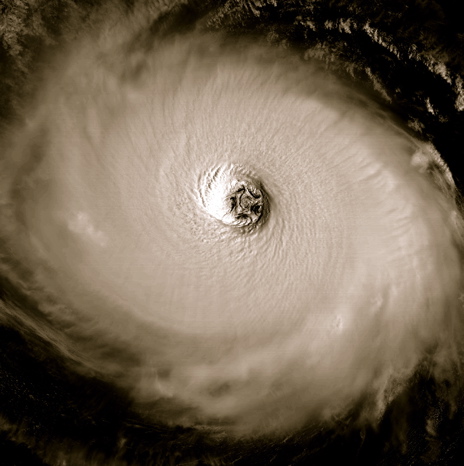
the 'eye' of the storm

We must remember that recessions inevitably follow periods of artificial growth. During these booms, malinvestments are made which ultimately must be liquidated during the ensuing busts. In short, mistakes made during booms are corrected during busts - and in the recent boom we made some real whoppers. We borrowed and spent too much money, bought goods we couldn't afford, built houses we couldn't carry, and developed a service sector economy completely dependent on consumer credit and rising asset prices. All the while, we allowed our industrial base to crumble and our infrastructure to decay.

In order to lay the foundation for real and lasting recovery, market forces must be allowed to repair the damage. However, current policy is counterproductive to this end. Trillions in stimulus dollars have kept the party going, but now what? How does deficit spending by the government address the problems that brought about the crash? It doesn't; it just delays and worsens the hangover - and we have to hope we don't die of alcohol poisoning.

By interfering with the unpleasant forces of the recession, we simply trade short-term gain for long-term pain. By propping up inefficient companies that should fail, we deprive more effective companies of the capital they need to grow. By holding up over-valued asset prices, we prevent the prudent or less well-off from snatching them up and, in doing so, creating a new price equilibrium based upon reality. By maintaining artificially low interest rates, we discourage the very savings that are so critical to capital formation and future economic growth. In addition, the false economic signals the Fed sends the market prevent a more efficient re-allocation of resources from taking place and leads to even more bad economic decision being made. By running such huge deficits, we further crowd-out private enterprise by making it harder for businesses to invest or hire.

The recently passed "cash for clunkers" program (currently on-hold, as it ran out of funding in one week) is a perfect example of how government policy can make the economy worse. By incentivizing Americans to destroy fully paid-for cars so they can go deeper into debt buying brand new ones, the government weakens an already crippled economy. The last thing we want to do is subsidize Americans to go deeper into debt by buying more stuff. Don't they realize that is precisely the behavior that got us into this mess?

Think about it this way. If your friend were in trouble because he had too much debt, would you encourage him to take on even more? Wouldn't a real sign of progress be a reduction of debt, even if he had to cut back on his everyday expenses? What is true for an individual is also true for a collection of individuals, even if they call themselves a 'government.' If, as a country, we are even deeper into debt now than we were before, we are worse off. Period. The fact that the additional debt enabled better short-term GDP numbers is a long-term negative.

Since we have learned nothing from past mistakes, we are condemned to repeat them. As if we have not already suffered enough as a consequence of the Bush/Greenspan stimulus, Obama/Bernanke are giving ever larger doses, which will prove lethal to any recovery.

The recession is over; long live the depression!

###

For a more in depth analysis of our financial problems and the inherent dangers they pose for the U.S. economy and U.S. dollar denominated investments, read my latest book "The Little Book of Bull Moves in Bear Markets." Click here to buy it now.
For a look back at how I predicted the current crisis, read my 2007 bestseller"Crash Proof: How to Profit from the Coming Economic Collapse." Click hereto buy a copy today.

More importantly, don't wait for reality to set in. Protect your wealth and preserve your purchasing power before it's too late. Discover the best way to buy gold at www.goldyoucanfold.com, download my free research report on the powerful case for investing in foreign equities available atwww.researchreportone.com, and subscribe to my free, on-line investment newsletter.

Jul 31, 2009
Peter Schiff
C.E.O. and Chief Global Strategist
Euro Pacific Capital, Inc.
1 800-727-7922

Labels: ,

Jul 27, 2009

Egon von Greyerz: The Dark Years are here

The Dark Years are here

by Egon von Greyerz – Matterhorn Asset Management

"In this newsletter we will outline what is likely to be the devastating effect of the credit bubbles, government money printing and of the disastrous actions that governments are taking. Starting in the next 6 months and culminating in 2011-12 the world will experience a series of tumultuous events which will be life changing for most people in the world. But 2011-12 will not be the beginning of an upturn in the world economy but instead the start of a long period of economic, political and social upheaval that could last for a couple of decades..."

To read this no-more-half-truths newsletter please click HERE

Labels: , , ,